
What Is Chronic Pain?
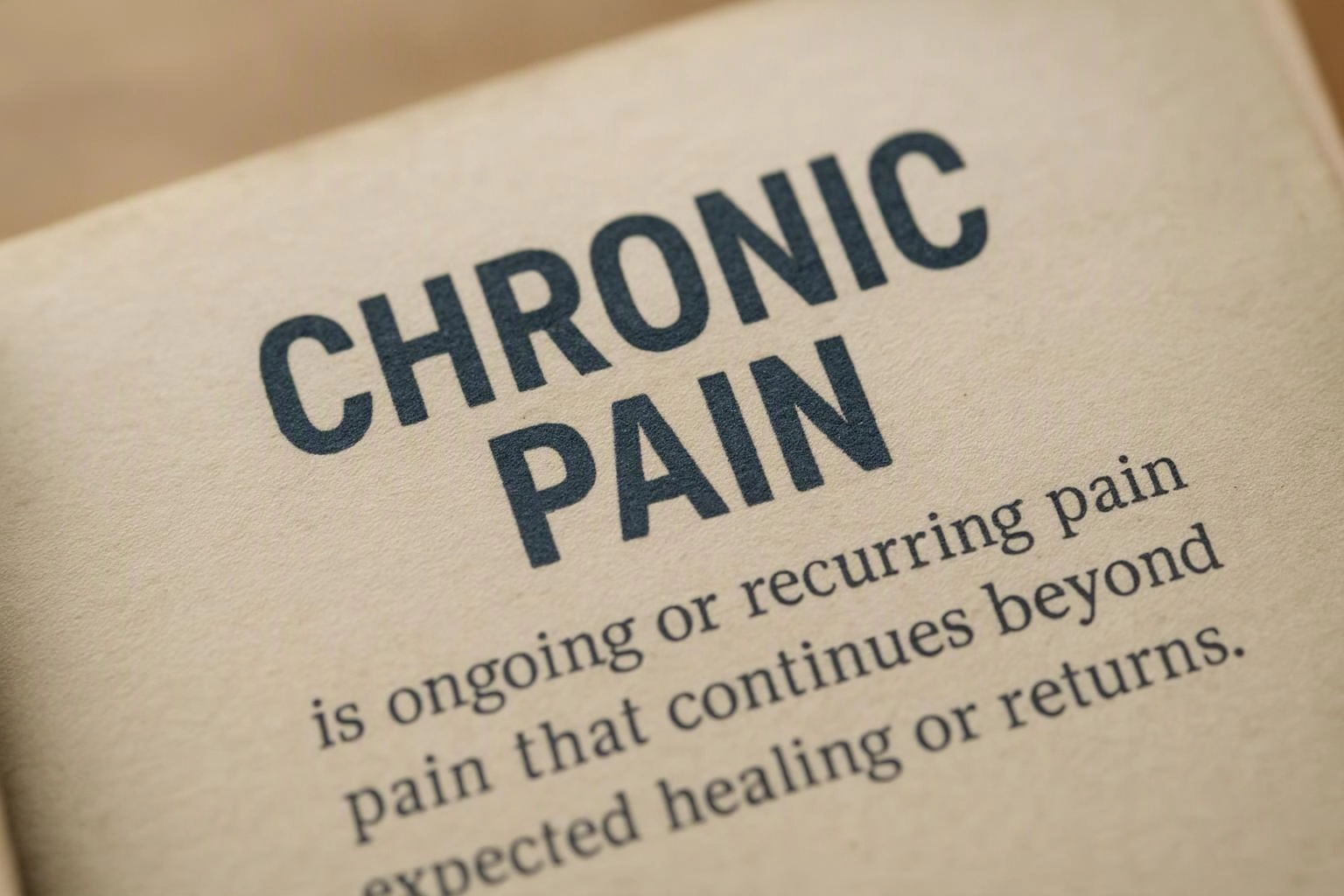
Chronic Pain is ongoing or recurring pain that continues beyond expected healing or returns over time. The pain may come from an injury, illness, nerve problem, or changes in the body. It can affect sleep, movement, mood, and daily tasks. Its pattern and cause help guide assessment and treatment.
Quick Facts About Chronic Pain
Category
Pain condition
Used for
Ongoing pain assessment and care
Common confusion
Duration and severity are different
Also called
Persistent pain, Long-Term Pain
Often discussed with
Pain Medication Management
Key Takeaways About Chronic Pain
- Pain may continue after an injury appears to heal.
- Treatment often tracks pain, function, sleep, and medication effects.
- Chronic pain isn't the same as severe pain.
How Chronic Pain Works

Chronic Pain can involve ongoing signals from injured tissue, nerves, or the brain and spinal cord. The nervous system may become more sensitive, so normal movement or light touch can feel painful. Pain can also continue after the original tissue damage improves.
Related glossary terms: Pain Scale, Neuropathic Pain, Nociceptive Pain.
Clinicians look at the pain's location, pattern, triggers, and effect on daily activities. They may also review sleep, mood, past care, and current medicines. A pain scale can describe intensity, but function gives added context. Someone may report less pain yet still struggle to walk, work, or sleep.
Pain Medication Management
Pain Medication Management connects medicine use with safety, function, and treatment goals. Medication reviews can consider benefits, side effects, interactions, and changes in symptoms. The care plan may change as the pain pattern or daily needs change.
From the Premier Injury Specialists team
When we assess Chronic Pain, we review the pain pattern, medical history, current medicines, and daily function. We also look for changes that may affect medication choices, such as side effects or reduced benefit. Our team tracks the patient's response over time and adjusts the discussion to the person's goals.
Chronic Pain in Practice: A Real-World Example
A person with back pain after an injury may still have pain during sitting, lifting, or sleep after the initial injury improves. During Pain Medication Management, the care team reviews symptom changes, medicine effects, and daily function.
Related Services
Related Terms
Pain Scale
A pain scale is a tool that helps a person describe pain intensity in a consistent…
Neuropathic Pain
Neuropathic Pain is pain caused by damage, irritation, or abnormal signaling in the nerves that carry…
Nociceptive Pain
Nociceptive pain is pain caused by actual or potential damage to body tissues. Specialized nerve endings…
Central Sensitization
Central Sensitization is a change in how the brain and spinal cord process pain signals. The…
Premier Injury Specialists
Have Questions About Chronic Pain?
Contact Premier Injury Specialists for practical guidance on Chronic Pain and related pain management physician work in McDonough.