
What Is Epidural Fibrosis?
Epidural Fibrosis is scar tissue that forms in the epidural space after spinal surgery, injury, or inflammation. The scar tissue may surround nerve roots and contribute to ongoing back or leg pain. Imaging can show changes, but the finding alone does not prove that scar tissue causes every symptom.
Quick Facts About Epidural Fibrosis
Category
Spinal scar tissue
Used for
Understanding ongoing nerve-related pain
Common confusion
Not the same as a herniated disc
Also called
Epidural scarring, Epidural scar tissue
Often discussed with
Epidural Steroid Injection
Key Takeaways About Epidural Fibrosis
- Scar tissue forms around structures in the epidural space.
- The finding may contribute to pain but does not prove its cause.
- Epidural fibrosis is not the same as a disc herniation.
How Epidural Fibrosis Works
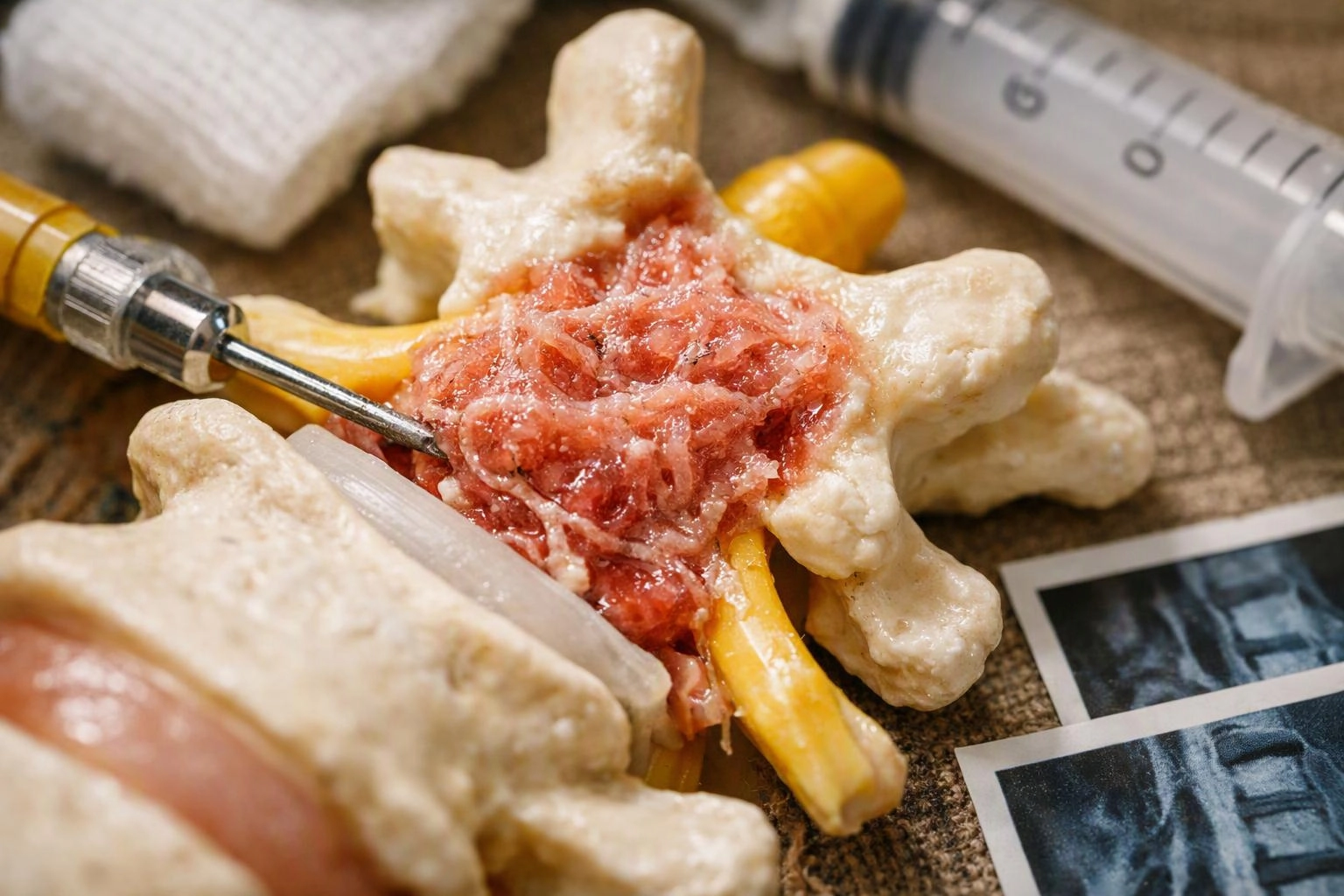
Epidural Fibrosis develops when healing creates scar tissue in the epidural space. That space surrounds the spinal cord and nerve roots. Scar tissue may attach to a nerve root or limit how freely the nerve moves.
Related glossary terms: Epidural Space, Lumbar Radiculopathy, Magnetic Resonance Imaging.
Symptoms can include back pain, leg pain, numbness, or tingling. These symptoms can also come from disc problems or spinal narrowing, so an imaging finding needs clinical context. A magnetic resonance imaging scan may help show scar tissue and other possible causes.
An epidural steroid injection places medicine near irritated nerves. The medicine may calm inflammation around the nerve, but it does not remove scar tissue. Doctors use the exam, symptom pattern, and imaging together when deciding whether the injection fits the pain pattern.
From the Premier Injury Specialists team
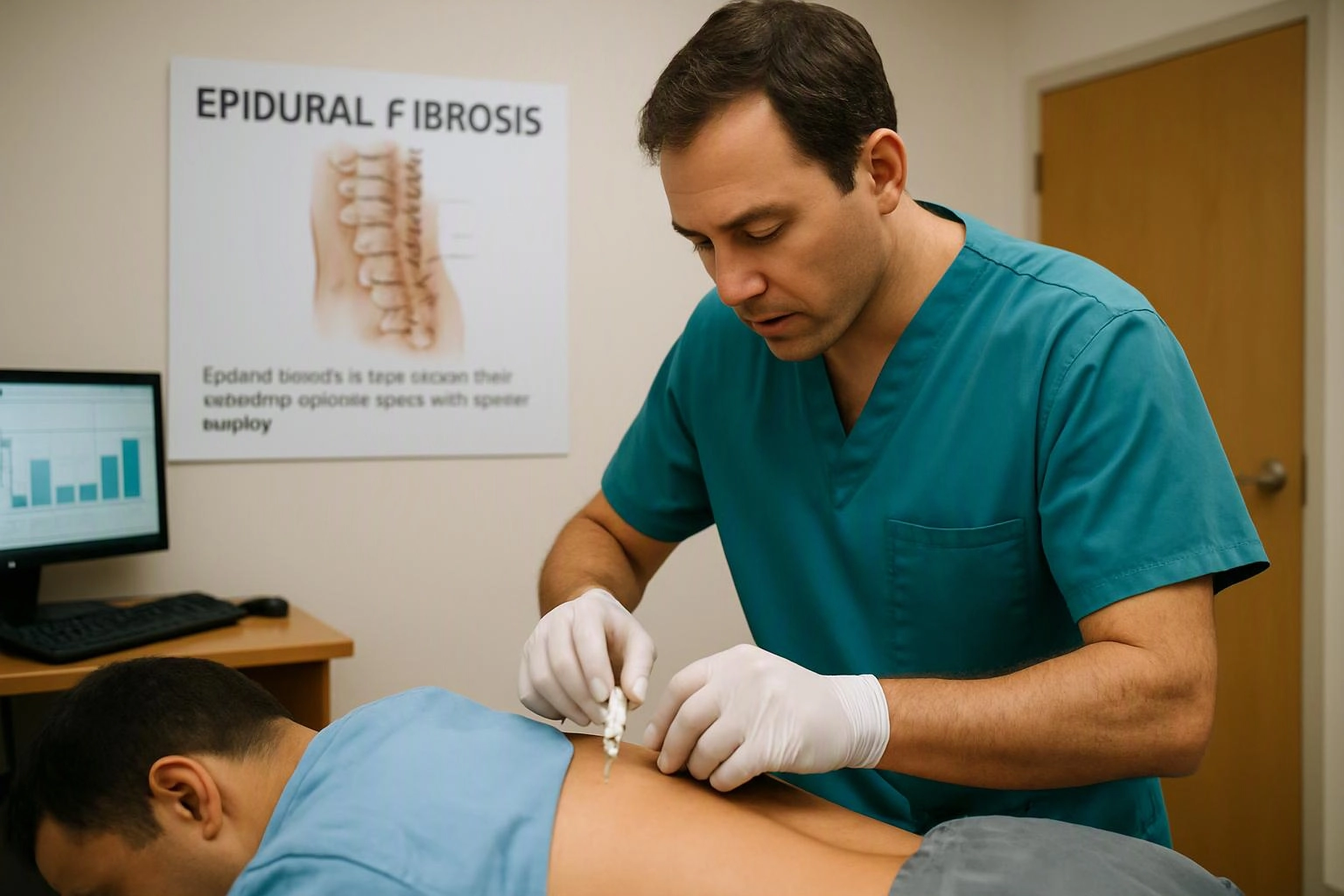
When we review epidural fibrosis, we compare the symptom pattern with the examination and available imaging. We look for signs that a nerve root is irritated before considering an epidural steroid injection. Our team also separates scar-related findings from other causes, such as disc disease or spinal narrowing.
Epidural Fibrosis in Practice: A Real-World Example
A person develops leg pain after lumbar spine surgery, and imaging shows scar tissue near a nerve root. During an epidural steroid injection evaluation, the provider checks whether the pain pattern matches irritation in that area.
Related Terms
Epidural Space
An epidural space is a narrow area inside the spinal canal that surrounds the outer covering…
Lumbar Radiculopathy
Lumbar Radiculopathy is a nerve-related condition in the lower back that affects a nerve root near…
Magnetic Resonance Imaging
Magnetic Resonance Imaging is a medical imaging method that uses a strong magnetic field and radio…
Post-Laminectomy Syndrome
Post-Laminectomy Syndrome is ongoing or returning back or leg pain after spine surgery. The pain may…
Premier Injury Specialists
Have Questions About Epidural Fibrosis?
Contact Premier Injury Specialists for practical guidance on Epidural Fibrosis and related pain management physician work in McDonough.