
What Is Paresthesia?
Paresthesia is an unusual skin sensation, such as tingling, prickling, burning, numbness, or a feeling of pins and needles. The sensation can occur without an obvious touch or injury. Paresthesia may affect a small area or follow the path of an irritated nerve, often involving an arm, leg, hand, or foot.
Quick Facts About Paresthesia
Category
Nerve-related sensation
Used for
Describing unusual skin feelings
Common confusion
Temporary pressure-related tingling
Also called
Pins and needles, Tingling sensation
Often discussed with
Neuropathy Treatment
Key Takeaways About Paresthesia
- Paresthesia often feels like pins and needles or burning.
- The sensation may follow an irritated nerve.
- Paresthesia isn't the same as ordinary skin pressure.
How Paresthesia Works
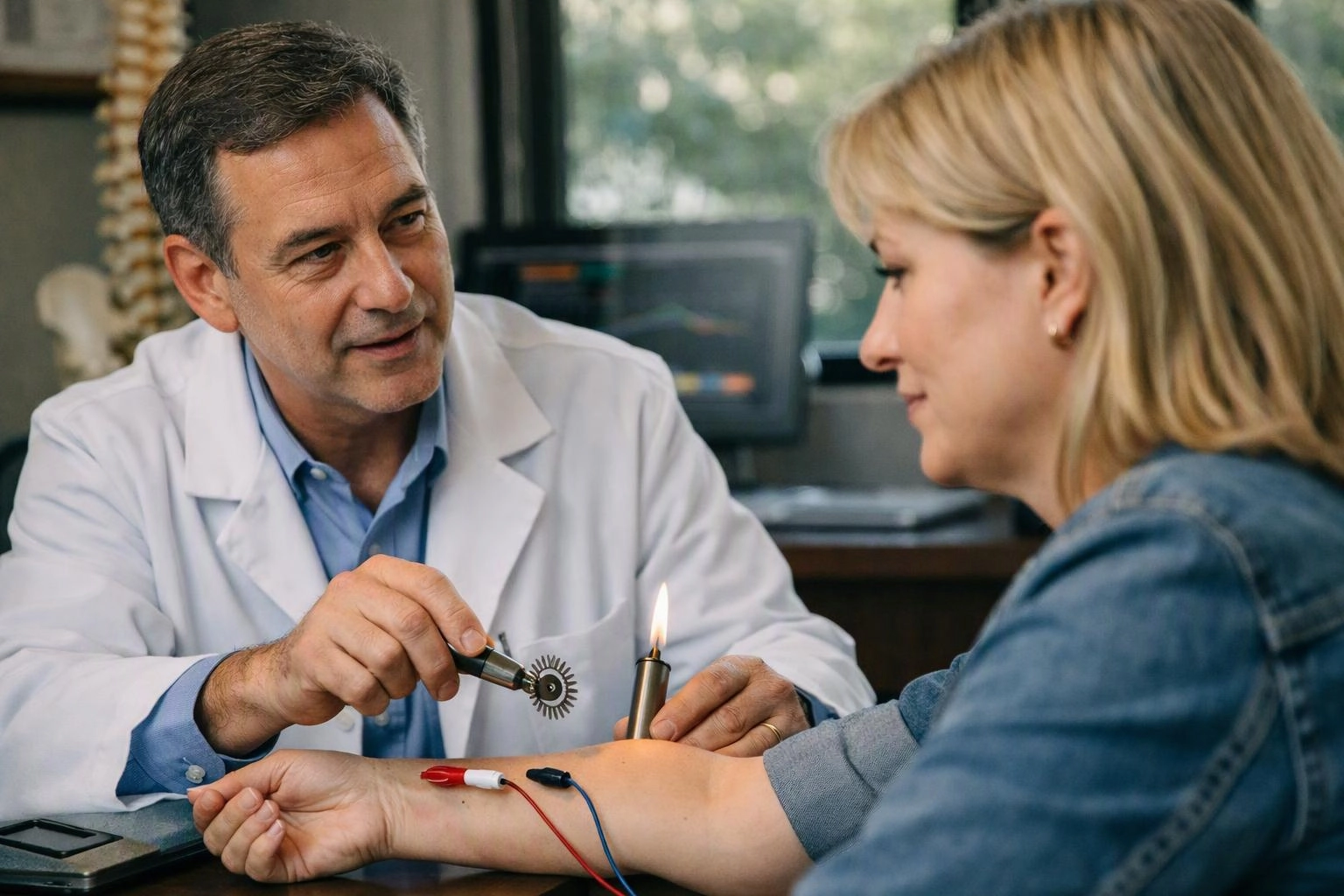
Paresthesia happens when nerve signals create an unusual skin sensation. The feeling may be brief or ongoing, and it can affect one spot or travel along a limb. Common descriptions include tingling, prickling, burning, crawling, or numbness.
Related glossary terms: Neuropathic Pain, Dermatome, Lumbar Radiculopathy.
A clinician checks the sensation's location, pattern, strength, and triggers. The exam may compare feeling and movement on both sides of the body. A pattern that follows a nerve or dermatome can help connect the symptom with a nerve problem. Neuropathic pain may occur with paresthesia, but the terms describe different experiences. Paresthesia names the altered sensation, while neuropathic pain describes pain caused by nerve dysfunction.
From the Premier Injury Specialists team
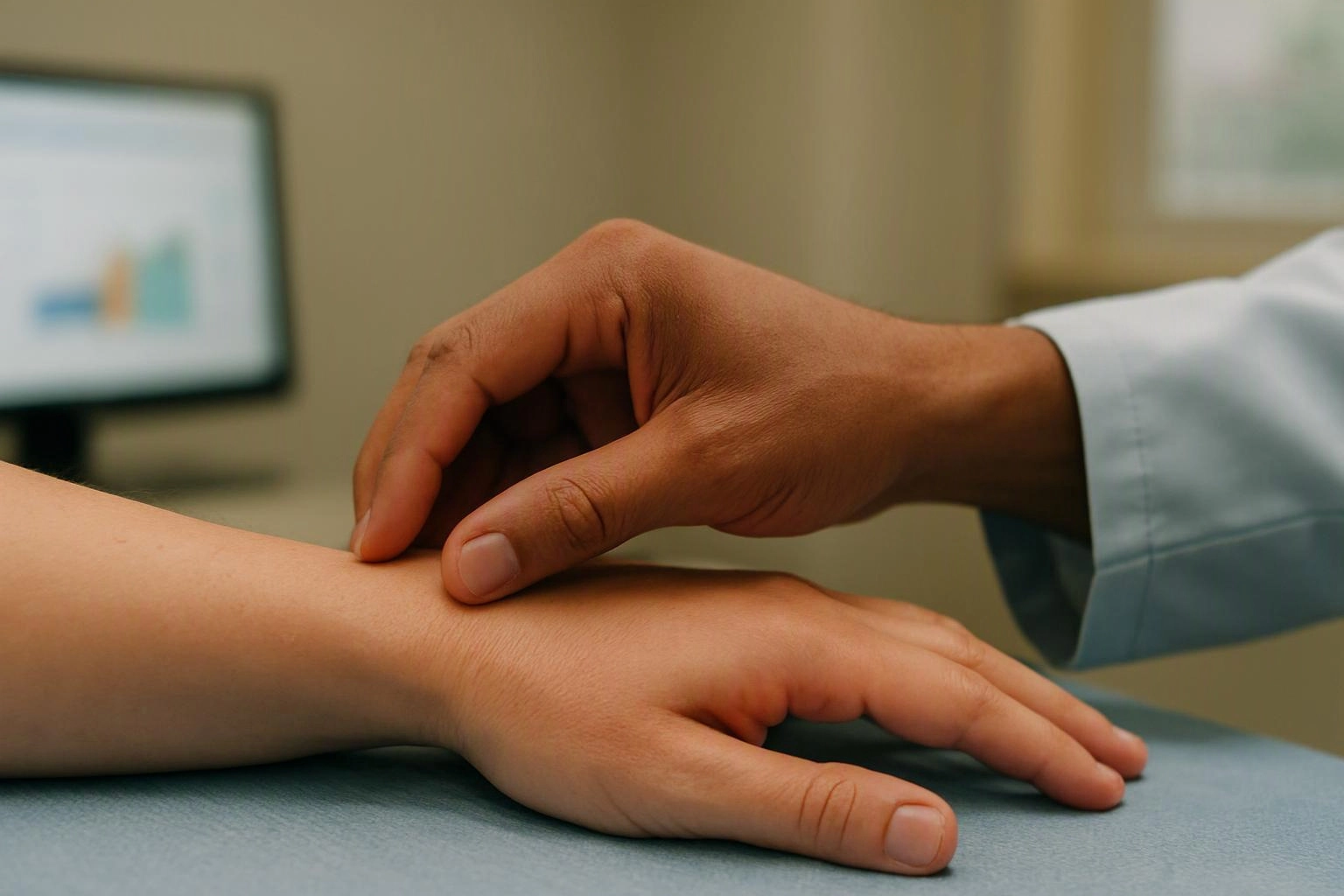
When we evaluate paresthesia, we ask where the sensation starts and whether it follows a consistent path. We also check changes in feeling, strength, movement, and pain during a neuropathy assessment. This pattern helps our team connect the reported symptom with the patient's broader clinical findings.
Paresthesia in Practice: A Real-World Example
A person with a pinched nerve in the lower back may feel tingling that travels from the back into the leg or foot. During neuropathy treatment, the care team records the path, triggers, and changes in that sensation.
Related Services
Related Terms
Neuropathic Pain
Neuropathic Pain is pain caused by damage, irritation, or abnormal signaling in the nerves that carry…
Dermatome
Dermatome is a skin area linked to sensory fibers from a single spinal nerve root. Doctors…
Lumbar Radiculopathy
Lumbar Radiculopathy is a nerve-related condition in the lower back that affects a nerve root near…
Cervical Radiculopathy
Cervical Radiculopathy is a condition that develops when a nerve root in the neck becomes irritated…
Premier Injury Specialists
Have Questions About Paresthesia?
Contact Premier Injury Specialists for practical guidance on Paresthesia and related pain management physician work in McDonough.