Recognizing Possible Facet Joint Pain
Facet joint pain often causes localized back or neck pain, stiffness, and discomfort with extension or twisting. Premier Injury Specialists evaluates symptoms, movement, and imaging to decide whether facet joint injections, medial branch blocks, or radiofrequency ablation may fit.
Request an EstimateWhat Does Facet Joint Pain Feel Like?
Facet joint pain usually feels like localized aching or soreness near the spine, with stiffness and pain during certain movements.
Facet joints connect the spinal vertebrae and help guide movement. Pain may develop in the cervical spine, thoracic spine, or lumbar spine.
Some people also feel referred pain near the shoulder, buttock, hip, or upper leg. The pain pattern depends on which facet joints are irritated.
Common Signs and Symptoms of Facet Joint Pain
Facet joint pain can cause several movement-related symptoms, but symptoms alone don't confirm the source of pain. We compare these signs with your history and examination findings.
These symptoms can overlap with muscle pain, disc pain, and nerve pain. Our team uses the full pain pattern to guide the pain evaluation.
Can Bending Backward or Twisting Worsen Facet Joint Pain?
Yes, bending backward or twisting can worsen facet joint pain because those movements may load the facet joints.
Spinal extension means bending backward. Rotation means twisting the spine. Both movements can increase facet loading when an irritated joint is involved.
We check how your symptoms change with controlled movement. Pain with extension or pain with twisting can support the evaluation, but neither symptom proves facet-mediated pain by itself.
What Can Contribute to Facet Joint Pain?
Facet joint pain can develop when spinal joints face stress, inflammation, or changes over time. We consider these possible contributors during your history and examination.
Facet joint inflammation can occur with several of these conditions. Our team looks for the cause that best matches your symptoms and examination.
How Is Possible Facet Joint Pain Evaluated?
Possible facet joint pain is evaluated through the pain history, movement testing, physical examination, and imaging when appropriate.
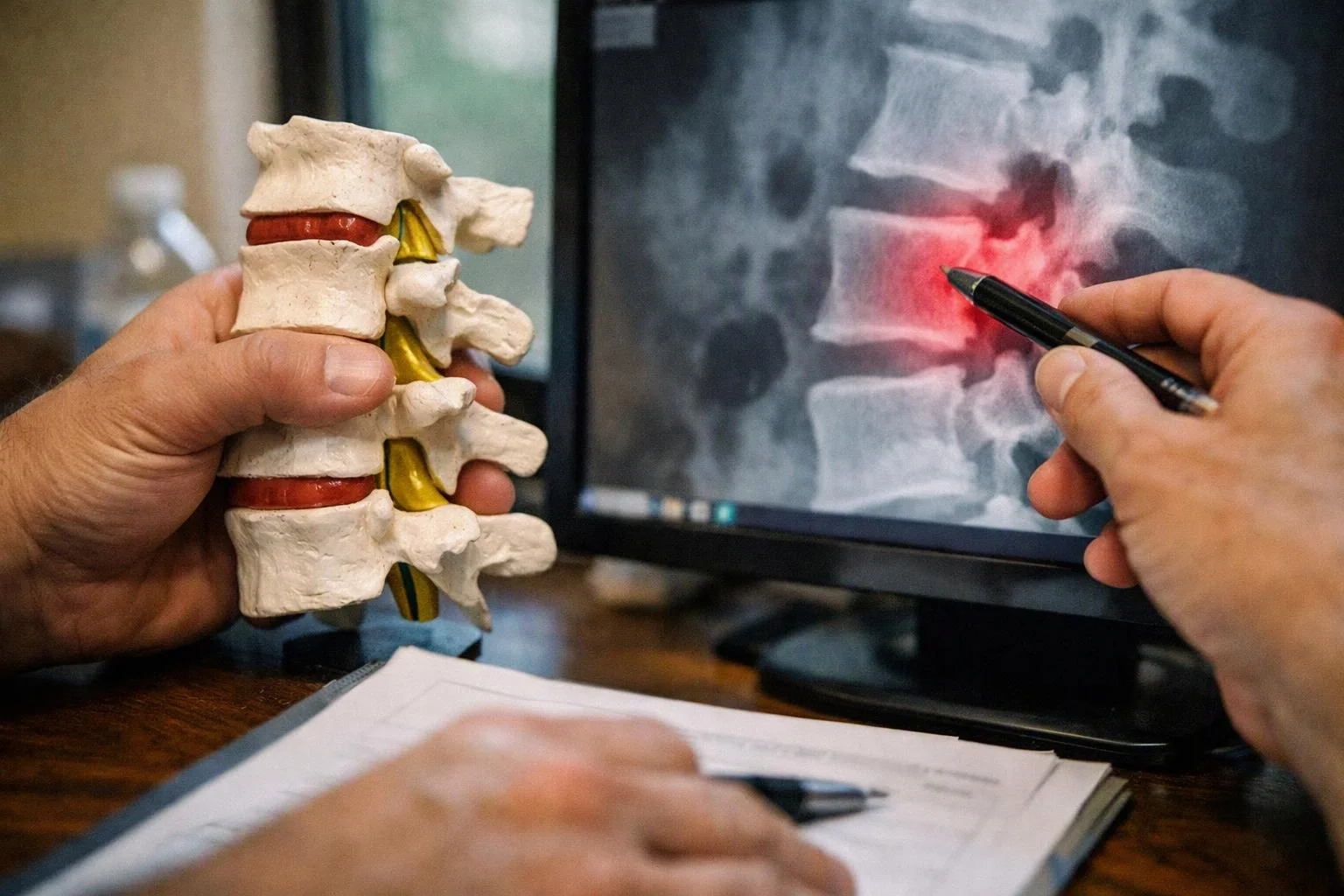
We ask where the pain starts, where it travels, and which activities change it. We also assess range of motion, tenderness, posture, and your neurologic examination.
Diagnostic imaging may show arthritis, spinal alignment changes, or other causes of pain. Imaging findings must match the symptoms because joint changes can appear without causing pain.
When the source remains uncertain, we may discuss a diagnostic block. This targeted procedure can add information to the treatment planning process.
What Does a Medial Branch Block Help Diagnose?
A medial branch block helps assess whether nerves serving the suspected facet joints are contributing to the pain.
A medial branch block places numbing medicine near the medial branch nerves. These nerves carry pain signals from certain facet joints.
Temporary pain relief after the diagnostic injection may support facet-mediated pain. We compare the relief with your usual movement-related symptoms.
What Should You Track Before an Evaluation?
Tracking your symptoms can help our team connect your pain pattern with daily activities. Bring these details to your pain evaluation.
Ways to Reduce Stress on the Facet Joints
Daily movement choices may reduce stress on the facet joints while you arrange an evaluation. These steps don't replace care when pain persists or worsens.
Our team can help connect these activity limits with your examination findings. We adjust treatment options to your symptoms, health history, and goals.
When May Facet Joint Procedures Be Discussed?
Facet joint procedures may be discussed when symptoms and examination findings suggest facet-related pain and other care hasn't provided enough relief.
Treatment planning may include Facet Joint Injections, medial branch blocks, or radiofrequency ablation. The choice depends on the suspected pain source and the purpose of the procedure.
We review the expected role of each option before making a recommendation. A diagnostic procedure may be considered when confirming the pain source would change the next treatment step.
How Do Facet Joint Injections and Radiofrequency Ablation Differ?
Facet joint injections, medial branch blocks, and radiofrequency ablation differ in purpose, target, and role in pain relief.
| Procedure | Main purpose | How it supports planning |
|---|---|---|
| Facet joint injections | Places medication near a suspected painful facet joint | May help assess and manage pain from that joint |
| Medial branch blocks | Tests whether medial branch nerves carry pain from suspected joints | May provide diagnostic information through temporary relief |
| Radiofrequency ablation | Uses controlled heat to reduce pain signaling from selected nerves | May be discussed after diagnostic findings support a facet-related source |
We select procedures based on the clinical picture and the information each procedure can provide. Radiofrequency ablation may be discussed when diagnostic findings support facet-related pain and conservative treatment hasn't provided enough relief.
When Should Back or Neck Pain Be Evaluated Promptly?
Back or neck pain should be evaluated promptly when pain persists, worsens, or appears with neurologic changes.
Contact our team promptly for leg weakness, arm weakness, new numbness, or pain that keeps limiting daily activity. Bowel or bladder changes require urgent medical attention.
Severe symptoms after an injury also deserve prompt evaluation. We use your history, physical examination, and available imaging to decide what happens next.
Questions About Possible Facet Joint Pain
Can facet joint pain feel like muscle pain?
Yes, facet joint pain can feel like muscle pain because both may cause localized aching and tenderness. Premier Injury Specialists compares movement triggers, pain location, and examination findings to separate possible sources.
Does facet joint pain cause numbness or tingling?
Facet joint pain usually doesn't directly cause numbness or tingling. Those symptoms can suggest nerve involvement, so we include a neurologic examination when evaluating neck or back pain.
Can facet joint pain occur in the neck as well as the back?
Yes, facet joint pain can occur in the cervical spine, thoracic spine, or lumbar spine. The location of pain and the movements that trigger it help guide our evaluation.
What happens if a medial branch block doesn't relieve pain?
If a medial branch block doesn't relieve the usual pain, we reassess the diagnosis and consider other possible pain sources. The result may guide different treatment options and further evaluation.
Facet joint pain evaluation can clarify whether movement-related symptoms come from the spinal joints or another source. Contact Premier Injury Specialists to discuss your symptoms and available care.
We offer Free Consultations. Contact our team to arrange an evaluation.
Related Resources
How to Track Progress in a Pain Management Plan
Brand vs BrandComparing Pain Management Providers by Insurance and Cost Factors
Brand vs BrandRadiofrequency Ablation Providers Worth Comparing in McDonough (2026)
Compared ToEpidural Steroid Injection vs. Facet Joint Injection: What to Discuss With Your Physician