Choosing a Pain Management Physician in McDonough
Pain management physician is compared by treatment fit, communication, medication management, care coordination, and follow-up. Premier Injury Specialists can discuss your needs during Free Consultations and explain which services may fit your condition. We also review records, referrals, and treatment goals before shaping a care plan.
Request an EstimateQuick Picks
Pain care choices should match the problem being treated and the support you need. These quick categories can help you focus your questions.
Start With the Pain Problems You Need Help With
The right pain management doctor should explain how services match your pain type, symptoms, and care goals.
A Pain management physician should first identify the pattern of your pain. Back pain treatment may focus on spine-related symptoms, while neck pain treatment may address pain that travels into the shoulders or arms.
Neuropathy treatment may be considered when burning, tingling, or numbness suggests nerve pain. We also review pain medication management needs, current medications, prior care, and your goals before discussing next steps.
Our Pain Medication Management services may help when medication review and safe coordination are part of your care plan.
Compare Premier Injury Specialists With a Typical Provider
A useful comparison looks at how each office handles the full care process. The table below shows factors to discuss during a pain management consultation.
| Factor | Premier Injury Specialists | Typical Provider |
|---|---|---|
| Treatment scope | Discusses back pain treatment, neck pain treatment, neuropathy treatment, and medication needs. | May focus on a narrower condition or service. |
| Patient communication | Explains findings, care options, and treatment goals in clear terms. | Communication practices can vary by office. |
| Medication review | Reviews current medications and possible safety concerns. | May review only medications related to that visit. |
| Imaging referrals | Connects imaging needs with symptoms, examination findings, and records. | Referral steps may differ by diagnosis and office process. |
| Medical documentation | Documents symptoms, findings, treatment, and care discussions. | Records usually reflect the services provided at that office. |
| Care coordination | Works with available medical records and other treating offices. | Coordination depends on the provider's process and the care team. |
| Follow-up care | Uses follow-up visits to review progress and adjust the care plan. | Follow-up practices vary by condition and treatment plan. |
No comparison table can replace a discussion of your symptoms. Ask how the office will track changes and explain the next decision.
Use These Steps to Choose a Pain Management Doctor
A structured review helps you compare care plans on the same points. Bring questions about diagnosis, records, and follow-up.
Ask Any Pain Management Doctor These Questions
Clear questions can show whether the office's process fits your needs. They also help you understand what happens after the first visit.
Know What to Bring to an Auto Accident Injury Evaluation
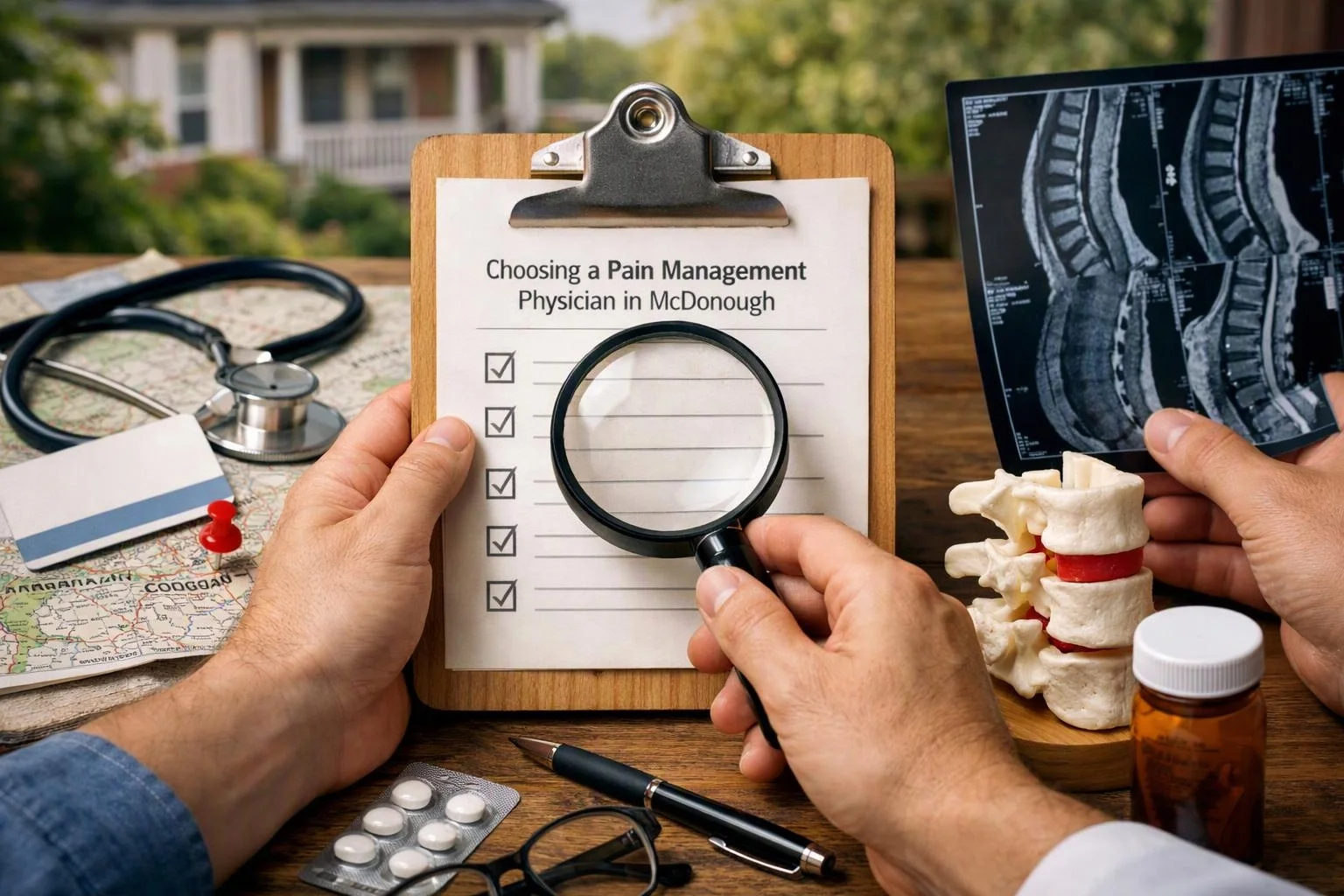
An auto accident injury evaluation works best when you bring accident records, current medication details, prior treatment information, and a clear account of your symptoms.
Bring the accident report or other accident records you have. Include a symptom history that explains when pain began, where it occurs, and how it affects daily activities.
Bring your medication list, imaging reports, prior treatment notes, and insurance information. We use these details to understand the injury, review existing care, and support appropriate injury documentation.
Understand How Pain Physicians Handle Documentation and Referrals
A pain management doctor can provide medical documentation related to care when the records support the visit and treatment plan.
Medical documentation may describe reported symptoms, examination findings, diagnosis, treatment discussions, and follow-up recommendations. We keep the record connected to the care provided and the findings discussed.
An imaging referral connects a clinical question with the test requested. We review available medical records, explain why imaging may help, and coordinate information with the primary care physician or other treating offices when appropriate.
After an auto accident injury, personal injury documentation can help show the care received and the symptoms discussed. We support specialist coordination by organizing relevant records and documenting changes during follow-up care.
Who Premier Injury Specialists May Fit Best
Premier Injury Specialists may fit patients who want a coordinated review of pain, records, medications, and next steps.
Plan Your Next Pain Management Consultation
The next step is to discuss your symptoms, treatment history, and goals during a consultation so the care plan can address your needs.
Before the visit, gather your medical history, current medications, imaging records, and questions about treatment. Our team can review the information, discuss pain medication management when relevant, and explain possible care coordination steps.
Premier Injury Specialists offers Free Consultations for people who want to discuss their pain care needs. Contact us to begin the conversation and determine which services may fit your condition.
Questions About Choosing a Pain Management Physician
How does a pain management doctor coordinate imaging referrals?
Premier Injury Specialists coordinates imaging referrals by connecting the requested test with your symptoms, examination findings, and medical history. We review available imaging records, explain the reason for the referral, and use the results when discussing your care plan.
Can a pain management doctor review medications prescribed by another physician?
Yes, a pain management doctor can review medications prescribed by another physician when you provide an accurate medication list and relevant medical records. We consider medication safety, treatment goals, and coordination with the other treating office.
What medical records should I request after a pain management visit?
Request the visit note, diagnosis, treatment plan, medication instructions, referral details, and follow-up recommendations. Ask for imaging reports or other records discussed during the visit when they apply to your care.
Related Resources
Spinal Cord Stimulation vs. Intrathecal Pain Pump: Comparing Long-Term Care
What Goes With ItHow to Track Progress in a Pain Management Plan
What Goes With ItWhiplash Symptoms, Evaluation, and Follow-Up Care
Compared ToEpidural Steroid Injection vs. Facet Joint Injection: What to Discuss With Your Physician