Spinal Cord Stimulation vs. Intrathecal Pain Pump
Spinal cord stimulation changes pain signals with electrical impulses, while an intrathecal pain pump delivers medication near the spinal cord. Premier Injury Specialists compares long-term care, maintenance, risks, and patient fit so you can discuss the safer option for your condition.
Request an EstimateQuick Picks
Both treatments are implantable pain therapies, but they work in different ways. Your pain diagnosis and treatment goals guide the choice.
- Spinal cord stimulation may fit people seeking targeted electrical signals for chronic nerve pain.
- Intrathecal pain pump may fit people who need medication delivered into spinal fluid.
How Spinal Cord Stimulation and Intrathecal Pain Pumps Work
Spinal cord stimulation uses a spinal cord stimulator to send controlled electrical impulses near the spinal cord. These signals can change how the nervous system processes pain signals.
An intrathecal pain pump uses pain medication delivery through a catheter into spinal fluid. This intrathecal medication delivery requires ongoing medication decisions and medical monitoring.
We review your pain pattern, past treatment response, and health history before discussing either implantable device. Our team also explains trial options, risks, and long-term care.
Learn more about our spinal cord stimulation service and how we plan treatment around your needs.
Spinal Cord Stimulator vs. Intrathecal Pain Pump at a Glance
The main difference is the treatment method. A stimulator changes nerve activity, while a pump provides medication through a catheter.
Cost also depends on the device, procedure planning, medication needs, follow-up care, and insurance coverage. We explain these cost drivers during a Free Consultations appointment.
| Factor | Spinal Cord Stimulation | Intrathecal Pain Pump |
|---|---|---|
| Treatment method | Electrical stimulation changes pain signals. | Medication enters spinal fluid through a catheter. |
| Cost drivers | Trial procedure, device selection, programming, and follow-up care. | Implantation, medication, dose changes, and refill visits. |
| Treatment timeline | Usually includes trial planning before permanent implantation. | Includes medication planning, implantation, and ongoing refills. |
| Maintenance | Device programming, battery review, and implant checks. | Pump refills, dose management, and catheter monitoring. |
| Best fit | Some patients with chronic neuropathic pain and clear relief goals. | Some patients who need supervised medication delivery. |
What Are the Advantages of Spinal Cord Stimulation?
Spinal cord stimulation may suit patients who want to manage pain with targeted electrical signals and reduce reliance on systemic medication.
Best for: Spinal cord stimulation may fit patients with nerve-related pain who want a non-drug signal approach.
What Are the Advantages of an Intrathecal Pain Pump?
An intrathecal pain pump may suit patients who need medication delivered directly into spinal fluid under ongoing medical supervision.
Best for: An intrathecal pain pump may fit patients whose pain needs supervised medication delivery.
Which Treatment Fits Your Pain Pattern and Care Goals?
The better option depends on the pain source, past treatment response, medication needs, health history, and long-term care goals.
Neuropathic pain may respond to neuromodulation when abnormal nerve signals drive symptoms. Axial pain, chronic back pain, failed back surgery syndrome, and cancer pain require a more detailed review.
Medication tolerance also matters. We ask how medication affects alertness, function, safety, and daily activities.
Our treatment plan connects pain relief with functional goals, such as walking, sleeping, working, or completing personal tasks.
What Long-Term Care Should You Compare?
Long-term care differs because stimulators need programming and hardware checks, while pain pumps need medication management and scheduled refills.
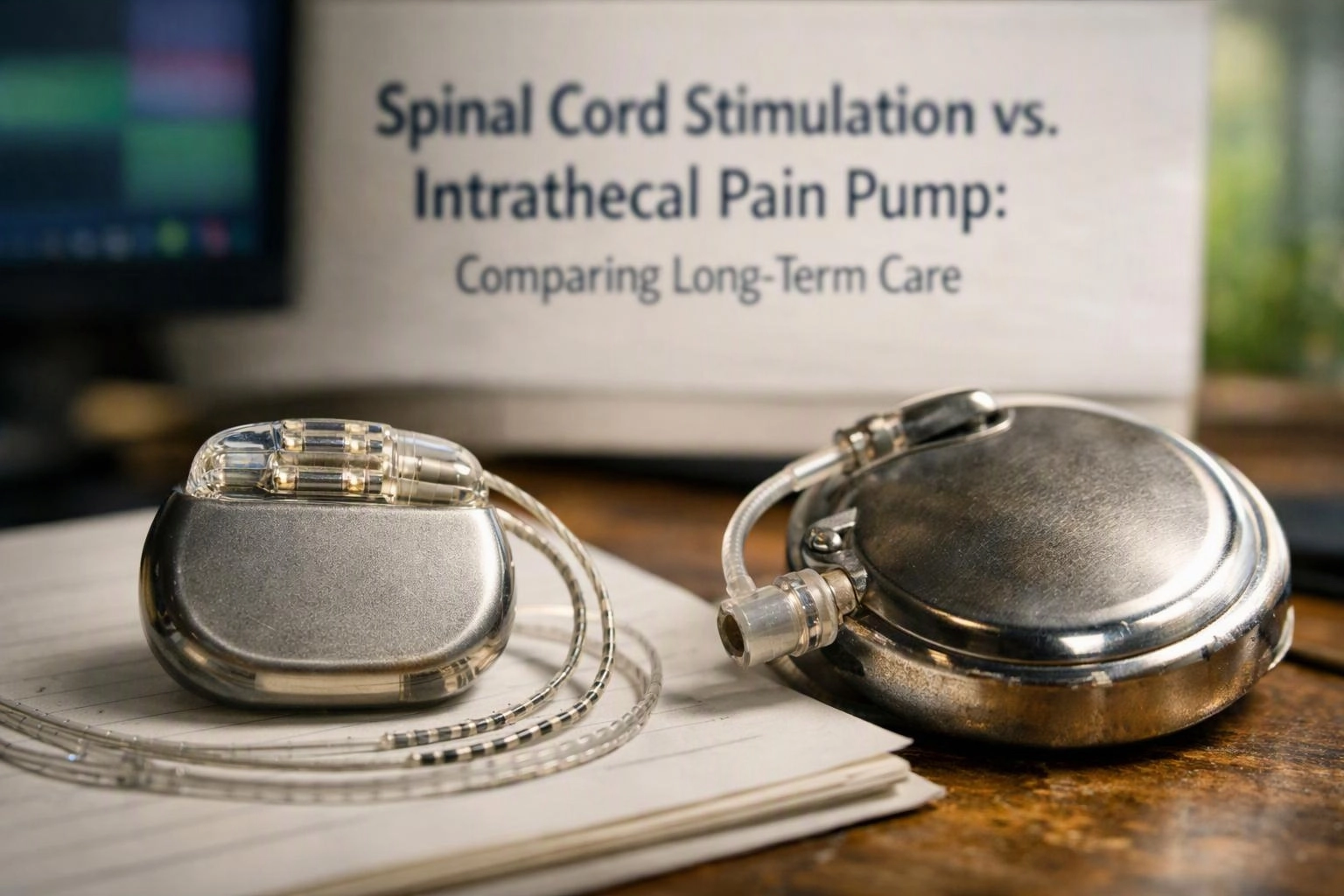
Compare follow-up visits, device programming, medication refills, pump refills, battery management, and implant monitoring. We also review how each option affects pain medication management.
Every implant requires attention to treatment response and possible treatment risks. Our team builds follow-up care around those needs.
What Ongoing Care Does a Spinal Cord Stimulator Need?
Spinal cord stimulator care includes programming, implant site checks, battery review, lead position assessment, and pain tracking.
We use pain tracking to compare stimulation settings with daily function. We also check for changes near the implant site and review whether the leads continue to support the treatment goal.
What Ongoing Care Does an Intrathecal Pain Pump Need?
An intrathecal pain pump needs refill planning, medication dose adjustment, pump reservoir checks, and catheter monitoring.
Unexpected changes can raise withdrawal risk or overdose risk. We explain warning signs and maintain a clear plan for medication monitoring and follow-up.
What Should You Ask Before a Spinal Cord Stimulator Trial?
Before a spinal cord stimulator trial, ask how success will be measured, what symptoms it targets, and what happens after the trial.
We use the trial results to guide discussions about a permanent implant. A trial does not replace a full review of risks, health history, and long-term care.
How We Help Compare Long-Term Treatment Options
Premier Injury Specialists starts with a pain evaluation, medical history review, and discussion of your daily goals.
We compare spinal cord stimulation, intrathecal pain pump implantation, and pain medication management when each option may fit the diagnosis. Our treatment planning also considers prior procedures, medication response, health risks, and follow-up needs.
Our team explains the process in plain language so you can make an informed decision with your medical care team.
What Factors Shape the Cost of Each Treatment?
Treatment cost depends on the procedure, device, medication plan, follow-up needs, and coverage details; Premier Injury Specialists can explain what a consultation includes.
For spinal cord stimulation, cost drivers may include implantation planning, device selection, a trial procedure, programming, and follow-up care. For an intrathecal pain pump, drivers may include implantation, pump medication, refill visits, dose changes, and monitoring.
Insurance coverage can change what you pay and which services require approval. We review the planned care and explain how to request an exact quote.
Questions to Ask Before Choosing an Implantable Pain Treatment
Good questions connect the implant to your treatment goals and long-term safety. Bring your medication list, procedure history, and main functional concerns to the visit.
How to Choose Between These Implantable Treatments
The right choice comes from matching the treatment system to your diagnosis, risks, and daily needs.
Questions About Spinal Cord Stimulation and Pain Pumps
Can a spinal cord stimulator replace a pain pump?
Premier Injury Specialists determines whether spinal cord stimulation can meet your goals without pump medication. The answer depends on your pain source, medication needs, prior treatment response, and health history.
Is a spinal cord stimulator or pain pump better for nerve pain?
Spinal cord stimulation may fit some nerve pain patterns because it changes electrical pain signaling. An intrathecal pain pump may fit patients whose symptoms require supervised medication delivery.
What happens if a spinal cord stimulator stops helping?
A spinal cord stimulator that stops helping needs a clinical review of programming, lead position, new pain causes, and treatment goals. We assess the device and discuss safe next steps.
What happens if an intrathecal pain pump runs out of medication?
An intrathecal pain pump that runs out of medication can create serious medication and withdrawal concerns. Contact the treating team promptly, and follow the refill plan closely.
Can pain medication management continue after either implant?
Yes, pain medication management may continue after either implant when the clinical plan supports it. We review medication use, function, side effects, and treatment response over time.
Discuss Your Implantable Pain Treatment Options
Premier Injury Specialists can review your pain pattern, treatment history, and long-term care goals. Contact our team to discuss whether spinal cord stimulation or an intrathecal pain pump fits your care plan.