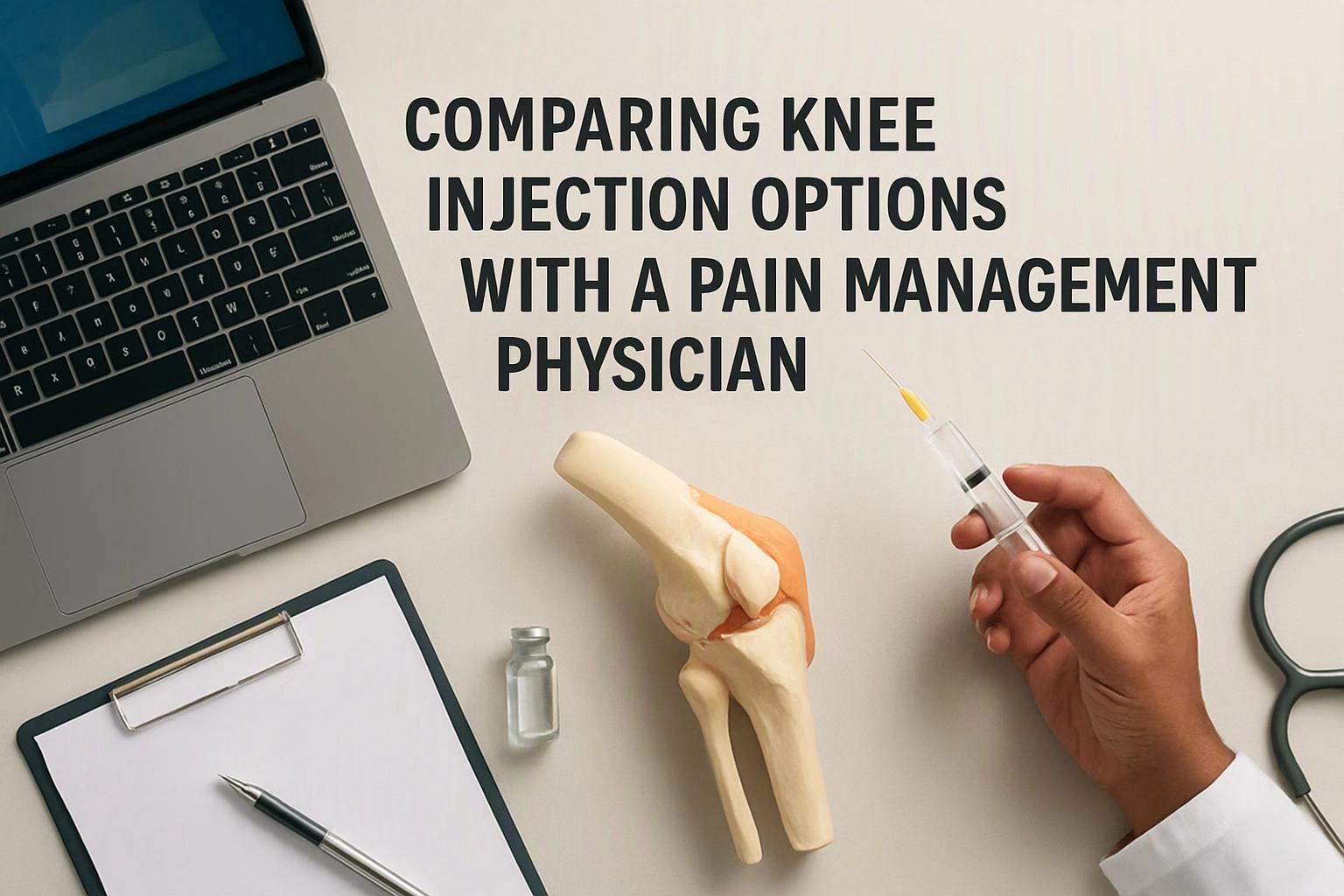
Comparing Knee Injection Options With a Pain Management Physician
Knee pain injection treatment options include corticosteroid, hyaluronic acid, and other targeted injections, while genicular nerve radiofrequency ablation may help selected patients with persistent pain. Premier Injury Specialists matches the treatment to your diagnosis, symptoms, and treatment goals.
Request an EstimateWhich Knee Pain Injection Options Are Available?
Knee pain injection options differ by the pain source, joint condition, and treatment goal. Our diagnostic evaluation helps show whether pain comes from joint inflammation, cartilage changes, or nerve pain signals.
Joint injections may place medicine or biologic material into the knee joint. Common choices include a corticosteroid injection, a hyaluronic acid injection, and a platelet-rich plasma injection.
Genicular nerve radiofrequency ablation treats pain signals outside the joint. We consider the knee joint, surrounding tissues, medical imaging, and your treatment goals before recommending an option.
How Do Common Knee Treatments Compare?
The best knee treatment depends on the diagnosis, desired relief, prior treatment response, and whether pain comes from the joint or nerves. We compare each option by its purpose, treatment timeline, maintenance needs, and patient suitability.
| Factor | Joint Injection Options | Genicular Nerve Radiofrequency Ablation | Key Trade-Off |
|---|---|---|---|
| Best for | Pain linked to joint inflammation, arthritis, or stiffness | Persistent pain linked to genicular nerve signals | The pain source must match the treatment target |
| Cost drivers | Medication or biologic material, treated areas, guidance, and coverage | Diagnostic block, equipment, treated nerves, and coverage | A personalized quote is needed because procedure details vary |
| Treatment timeline | Relief and follow-up depend on the medicine and diagnosis | Evaluation, diagnostic nerve block, treatment, and follow-up | The process may include more assessment before treatment |
| Maintenance | May involve repeat care based on symptoms and clinical findings | Follow-up depends on the response and return of symptoms | Neither option suits every cause of knee pain |
Joint injections focus on structures inside the knee. Nerve ablation focuses on selected nerves around it, so the diagnostic process matters.
What Are the Advantages of Corticosteroid Injections?
Corticosteroid injections can reduce inflammation-related knee pain when joint irritation is a major cause. We use the examination and medical history to decide whether a cortisone injection fits your condition.
Best for: patients whose knee pain is strongly linked to inflammation and who need targeted symptom relief.
What Are the Advantages of Hyaluronic Acid Injections?
Hyaluronic acid injections may suit selected people with knee osteoarthritis and ongoing joint pain or stiffness. We review the condition of the knee joint and the person’s past treatment response.
Best for: selected patients with knee osteoarthritis, joint stiffness, and pain that has not improved enough with other care.
When Does Genicular Nerve Radiofrequency Ablation Make Sense?
Genicular nerve radiofrequency ablation targets pain signals from nerves around the knee and may help selected patients with persistent pain. The treatment does not repair cartilage or remove arthritis from the knee joint.
The genicular nerves carry pain messages from areas around the knee. We may use a diagnostic nerve block to learn whether these nerves contribute to chronic knee pain before considering radiofrequency ablation.
This approach may be considered when joint-focused care has not met the patient’s goals. It can also be part of a discussion about knee replacement alternatives when surgery is not suitable or the patient wants to review non-surgical knee pain treatment.
How We Choose a Knee Pain Treatment
We choose a knee treatment after reviewing the pain source, health history, prior care, and treatment goals. Our pain management physician uses this information to build a focused treatment plan.
This process helps us match the injection treatment to the diagnosis. It also helps us explain treatment alternatives, procedure risks, and follow-up care.
What Changes the Cost of Knee Pain Treatment?
Knee treatment cost depends on the selected procedure, materials, treated areas, guidance method, and coverage; we explain the quote during a Free Consultations discussion.
Cost drivers may include the treatment type, number of treated areas, imaging guidance, medication or biologic materials, and insurance coverage. Out-of-pocket cost also depends on the benefits and requirements of your plan.
We review what the proposed care includes before scheduling. Contact us through our consultation request to discuss the treatment and obtain an exact quote.
What Should You Ask Before Scheduling a Knee Injection?
Before scheduling, ask which pain source the injection targets, what alternatives exist, and how the treatment fits your goals. Clear answers help you make a safer, informed choice.
We answer these questions during the diagnostic evaluation. We also explain when a joint injection and nerve ablation address different pain sources.
How to Prepare for a Knee Pain Consultation
Bring a clear symptom timeline, a list of pain triggers, and your current medications. These details help us connect your symptoms with the examination findings.
Bring information about previous injections, therapy, medicines, and other treatments. Imaging records and a complete medical history can also help us review your options.
Write down your main treatment goals before the visit. We use those goals to discuss joint injections, nerve treatments, and follow-up care in plain language.
Explore Knee Joint Injection Treatment
Premier Injury Specialists provides diagnostic evaluation and non-surgical treatment planning for knee pain. Our team considers arthritis pain, inflammation, nerve pain signals, and your response to previous care.
Learn more about Joint Injections and how injection treatment may fit your care plan. We can also discuss Knee Pain Treatment and Arthritis Pain Treatment based on your symptoms and goals.
We explain the recommended procedure, possible risks, aftercare, and follow-up before treatment is scheduled.
Questions About Knee Injection Treatment Options
Can knee injections help arthritis pain?
Yes, knee injections can help selected patients with arthritis pain when the treatment matches the pain source. Premier Injury Specialists reviews the knee condition, inflammation, medical history, and treatment goals before making a recommendation.
Are knee injections appropriate after other treatments have failed?
Yes, knee injections may be appropriate after other treatments have not provided enough relief, but the diagnosis still guides the choice. We review previous care and discuss treatment alternatives before recommending injection therapy.
What is the difference between a knee injection and genicular nerve ablation?
A knee injection places medicine or biologic material into or near the joint, while genicular nerve ablation targets selected nerve pain signals around the knee. We choose between them based on whether the main pain source is joint-related or nerve-related.
Can I discuss my current medications before a knee injection?
Yes, you should discuss current medications before a knee injection. We review your medication list and health history as part of the safety assessment.
What should I bring to a knee pain consultation?
Bring your symptom timeline, current medication list, previous treatment details, imaging records, and medical history. These records help us complete a focused pain assessment and discuss suitable treatment goals.
Knee pain treatment starts with matching the procedure to the pain source and your goals. Premier Injury Specialists can review your symptoms, prior care, and treatment options during a consultation.
Get a Free Estimate