Preparing for a Pain Management Evaluation: Records, Insurance, and Intake
Pain management first appointment preparation starts with your medical records, medication list, insurance details, and symptom history. Premier Injury Specialists helps organize injury evaluations and identify whether imaging referrals may support your care.
Request an EstimateWhat to Bring to Your Pain Management Appointment
Bring your medical records, medication list, imaging information, insurance details, identification, and questions about your pain. Good appointment preparation gives our team a clearer view of your medical history.
Gather the following items before your first appointment. If a record is still being requested, tell our team so we can note it during patient intake.
Write down your pain level and symptom timeline in your own words. These notes can help you remember details during the pain assessment.
How Insurance and Referral Requirements Can Affect Intake
Insurance rules and referral requirements depend on your health plan and the clinic you choose, so confirm both before the visit. Our team can review the information you provide and explain what the intake process requires.
Health insurance plans may require a referral from a primary care doctor. Some plans also require prior authorization before certain visits, tests, or treatments.
Coverage verification can show whether the clinic is an in-network provider. Out-of-network care may follow different plan rules, while self-pay patients can ask about the available consultation process.
Bring your insurance card and identification so the office can review plan details. Ask whether a referral, authorization, or updated medical record is needed before your appointment.
Which Visit Preparation Approach Fits Your Situation?
A complete-records approach supports a more informed evaluation, while a records-in-progress approach helps when documents are still being collected. Choose the approach that matches what you have available today.
| Factor | Complete Records | Records Still Being Gathered |
|---|---|---|
| Medical history | Gives the team a broader view of past care. | Allows the visit to begin while missing records are requested. |
| Previous treatment | Shows treatments tried and how symptoms responded. | Depends more on your written symptom history. |
| Insurance preparation | Makes coverage questions easier to review with the records. | May require follow-up when referral or authorization details change. |
| Appointment readiness | Supports a more complete initial discussion. | Still supports an evaluation when you bring clear notes. |
| Record maintenance | Keep copies updated after new visits or treatment. | Track each request and add records as they arrive. |
Our team can work with the information available during the initial pain consultation. Bring new documents later when they become available.
Why Prepare Records Before the Evaluation?
Preparing records before the evaluation helps connect your symptoms with your medical history. Our team uses that background to understand the injury and discuss appropriate next steps.
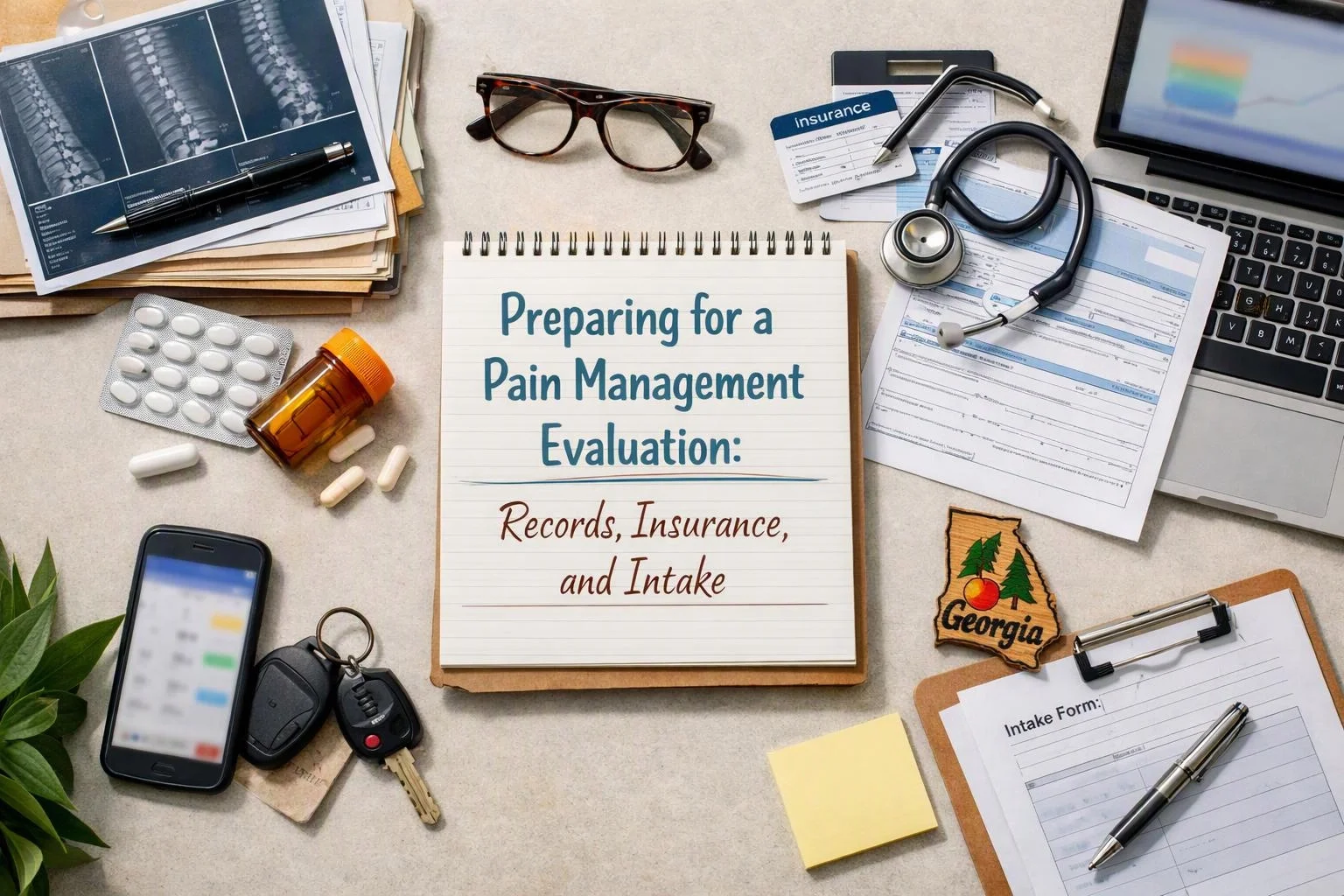
Organized records also reduce the chance that important details are forgotten. Bring what you have, even when the file is not complete.
Why Bring Records to the Appointment?
Records help our team evaluate current symptoms, medication safety, prior diagnoses, treatment response, and care coordination. They give the physical examination and pain history more useful context.
Bring imaging discs when you have them, even if you also have the imaging report. The report explains the findings, while the images may add useful clinical context.
What Happens at the First Pain Management Visit?
The first pain management visit usually reviews your pain history, medical records, medications, examination findings, and treatment goals. Our team then discusses a care plan based on the information available.
Patient intake usually begins with basic health details and the reason for the visit. We ask about pain location, triggers, numbness, weakness, sleep, daily activities, and previous treatment.
A physical examination may assess movement, strength, sensation, reflexes, and areas that reproduce your symptoms. The medication review includes current medications and allergies.
Our pain management physician explains the findings in clear terms. The care plan may include follow-up care, therapy discussions, medication guidance, or diagnostic imaging when clinical findings support it.
Can a Pain Management Doctor Order Imaging?
Yes, a pain management doctor can order or recommend imaging when the examination and medical history show that imaging may help evaluate the pain. Our team connects the imaging decision to your symptoms and clinical findings.
Diagnostic imaging may include an X-ray, MRI, or CT scan. Each test provides different information, so the choice depends on the suspected injury and the question the imaging needs to answer.
An imaging referral may be appropriate when existing records do not explain your symptoms. It may also help with an auto accident injury, herniated disc evaluation, or spine injury evaluation.
Bring earlier imaging reports and discs when possible. Existing information can help our team decide whether new diagnostic imaging is useful.
How We Help Organize an Injury Evaluation
Premier Injury Specialists organizes injury evaluations by reviewing your symptoms, records, medications, examination findings, and treatment goals. We use that information to support a focused pain management evaluation.
Our team works with patients who need an auto accident injury evaluation, herniated disc evaluation, or spine injury evaluation. We also review available imaging and identify when an imaging referral may support the next step.
For injury-related care, our Auto Accident Injury Evaluation service can help connect the accident history with the symptoms and records discussed during intake.
Bring your questions and the records you already have. Contact us to request a consultation and discuss how our team can help organize your evaluation.
Get a Free EstimateQuestions About Your First Pain Management Appointment
Do I need a referral to see a pain management doctor?
Premier Injury Specialists can help you review whether your health insurance or selected clinic requires a referral. Referral rules depend on your plan and may also involve prior authorization.
Should I bring imaging discs to my first pain management appointment?
Yes, bring imaging discs when you have them, along with the matching imaging reports. The images and reports can give our team more context during the evaluation.
What questions should I ask at a pain management consultation?
Ask what may be causing your pain, what the examination shows, and whether diagnostic imaging is needed. You can also ask about treatment goals, medication safety, follow-up care, and the next step in your care plan.
Should I write down my pain symptoms before the appointment?
Yes, write down your pain location, triggers, changes, numbness, weakness, and treatment response. A symptom timeline helps our team understand how your condition affects daily activities.
Related Resources
Auto Accident Injury Evaluation Companies Worth Comparing in McDonough (2026)
What It SolvesHeadaches After a Neck Injury: When to Seek an Evaluation
What It SolvesBest Auto Accident Injury Evaluation Options for Urgent, Budget & Long-Term Projects in McDonough
What Goes With ItEpidural Steroid Injections: Purpose, Evaluation, and Considerations