How Pain Specialists Use Exams, Imaging, and Diagnostic Tests
Pain management imaging and diagnostic testing work together to connect symptoms with physical findings and guide treatment decisions. Premier Injury Specialists reviews the exam, imaging, and available records before deciding whether further testing may help.
Request an Estimate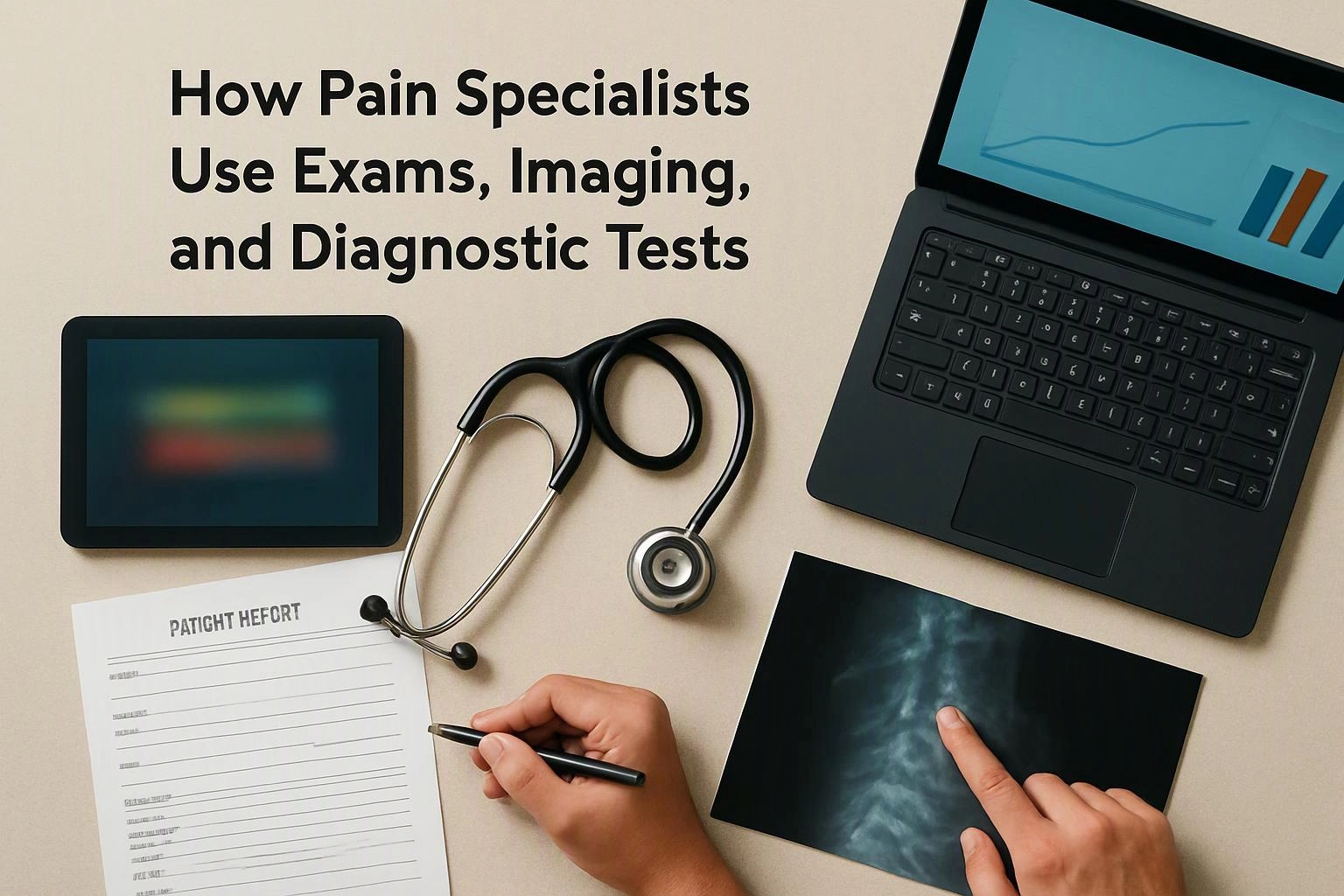
How Do Pain Specialists Evaluate Pain?
Pain specialists evaluate pain by combining your history, symptoms, physical findings, and existing medical records.
We begin with a medical history and symptom review. We ask when symptoms started, what makes them worse, and whether pain travels into an arm or leg.
Our physical examination may include range of motion, strength, sensation, and reflex testing. A neurological examination can help us assess numbness, weakness, tingling, and other nerve symptoms.
This pain assessment helps us form a working view of the possible pain source. We also review prior treatment and the injury mechanism when those details are available.
When Do Exams and Imaging Work Together?
Exams and imaging work together when symptoms and physical findings need an anatomical explanation. We use both sources to decide whether an imaging referral may answer the diagnostic question.
These situations may call for both services:
We connect each finding to the patient’s symptoms and goals. That process helps prevent an imaging result from being viewed without clinical context.
What Does Imaging Show That an Exam Cannot?
Medical imaging shows internal structures, while a physical exam shows how those structures relate to movement, strength, sensation, and pain.
An X-ray can show bone injury, spinal alignment, and some changes in the joints. Magnetic resonance imaging can show soft tissue, discs, spinal structures, and possible nerve compression.
Computed tomography provides detailed views of bone and other spinal structures. Imaging results may support a diagnosis, but they don't always explain every symptom.
We compare the image, radiology report, pain pattern, and physical findings. This clinical correlation helps us decide whether the finding matters to your pain.
Which Diagnostic Tests May Be Considered?
Diagnostic tests are selected according to the suspected pain source and the questions left after the exam and imaging review. We choose testing that may add useful information to treatment planning.
| Test | What it may help assess |
|---|---|
| X-ray | Bone injury, joint changes, and spinal alignment |
| Magnetic resonance imaging | Soft tissue, discs, spinal structures, and possible nerve compression |
| Computed tomography | Detailed views of bone and complex spinal areas |
| Electromyography | Electrical activity in muscles and signs of nerve problems |
| Nerve conduction study | How signals travel along selected nerves |
| Diagnostic injection | Whether a suspected pain source responds to targeted medication |
| Laboratory testing | Health conditions that may affect pain or treatment choices |
Testing isn't automatic after every visit or scan. We order or recommend it when the result could change the clinical evaluation or treatment plan.
How Do Imaging Referrals and Diagnostic Testing Work Together?
Imaging referrals and diagnostic testing work together through a planned sequence that connects clinical findings with the next evaluation step. Our team reviews the available information before recommending another test.
Our Imaging Referrals process is based on the clinical question, not on ordering tests without a clear purpose. We explain what information each next step may provide.
Do I Need More Testing or Medical Records?
More testing or records may be needed when existing information does not answer the clinical question.
Please bring your medical records, radiology report, and imaging disc when available. Prior treatment details, medication history, and a clear symptom timeline can also help us understand the problem.
Repeat testing may be considered when symptoms change, the earlier study does not address the suspected pain source, or the image quality limits review. We first check whether existing records can answer the question.
Does My Imaging Match What the Exam Found?
Imaging matches the exam when the anatomical finding fits the pain pattern and physical findings.
Clinical correlation means we compare imaging findings with movement limits, strength, sensation, and nerve symptoms. A disc finding may matter when it fits radiating pain and other signs of nerve irritation.
An incidental finding appears on an image but may not explain your symptoms. We consider the full clinical picture before connecting any finding to your pain.
When imaging and the exam do not match, we may review other causes or consider follow-up testing. Treatment response can also provide useful information during follow-up evaluation.
What Happens After the Exam and Test Review?
The next step follows from the combined exam, imaging, test results, and treatment goals.
Patient questions are part of this process. We explain what the results mean and what they do not prove.
How We Review Imaging and Diagnostic Results
Premier Injury Specialists reviews your symptoms, examination findings, imaging, and records to determine what evaluation may be appropriate.
We use this approach for herniated disc evaluation, spine injury evaluation, and auto accident injury evaluation. Our team also reviews the radiology report alongside the images when those materials are available.
Bring your questions, prior treatment details, medication history, and symptom timeline to the appointment. Contact Premier Injury Specialists to discuss your pain evaluation and next steps.
Questions About Pain Exams, Imaging, and Tests
Does a pain management doctor order imaging?
Yes, Premier Injury Specialists may recommend or arrange imaging when the examination and symptoms show that internal structures need review.
Can imaging show the cause of pain?
Yes, imaging can show a possible cause of pain, but the finding must fit the pain pattern and physical examination.
Why might a pain specialist request testing after an MRI?
Additional diagnostic testing may help when an MRI does not explain nerve symptoms, strength changes, or the full pain pattern.
Should I bring my imaging disc and radiology report to a pain appointment?
Yes, bring the imaging disc and radiology report when available, along with relevant medical records and prior treatment information.
Related Resources
Auto Accident Injury Evaluation Companies Worth Comparing in McDonough (2026)
What It SolvesHeadaches After a Neck Injury: When to Seek an Evaluation
What It SolvesBest Auto Accident Injury Evaluation Options for Urgent, Budget & Long-Term Projects in McDonough
Compared ToAuto Accident Pain Care: Comparing Insurance and Attorney-Lien Billing