
What Is Electromyography?
Electromyography is a diagnostic test that records the electrical activity of muscles and the nerves that control them. A clinician uses a fine needle electrode to measure muscle signals during rest and movement. The results can help show whether weakness, numbness, or pain may involve muscle tissue, peripheral nerves, or nerve roots.
Quick Facts About Electromyography
Category
Diagnostic test
Used for
Checking muscle and nerve function
Common confusion
It differs from a nerve conduction study
Also called
EMG, Electromyogram
Often discussed with
Neuropathy Treatment
Key Takeaways About Electromyography
- It records electrical activity from selected muscles.
- Results can help locate a nerve or muscle problem.
- It is not the same as a nerve conduction study.
How Electromyography Works
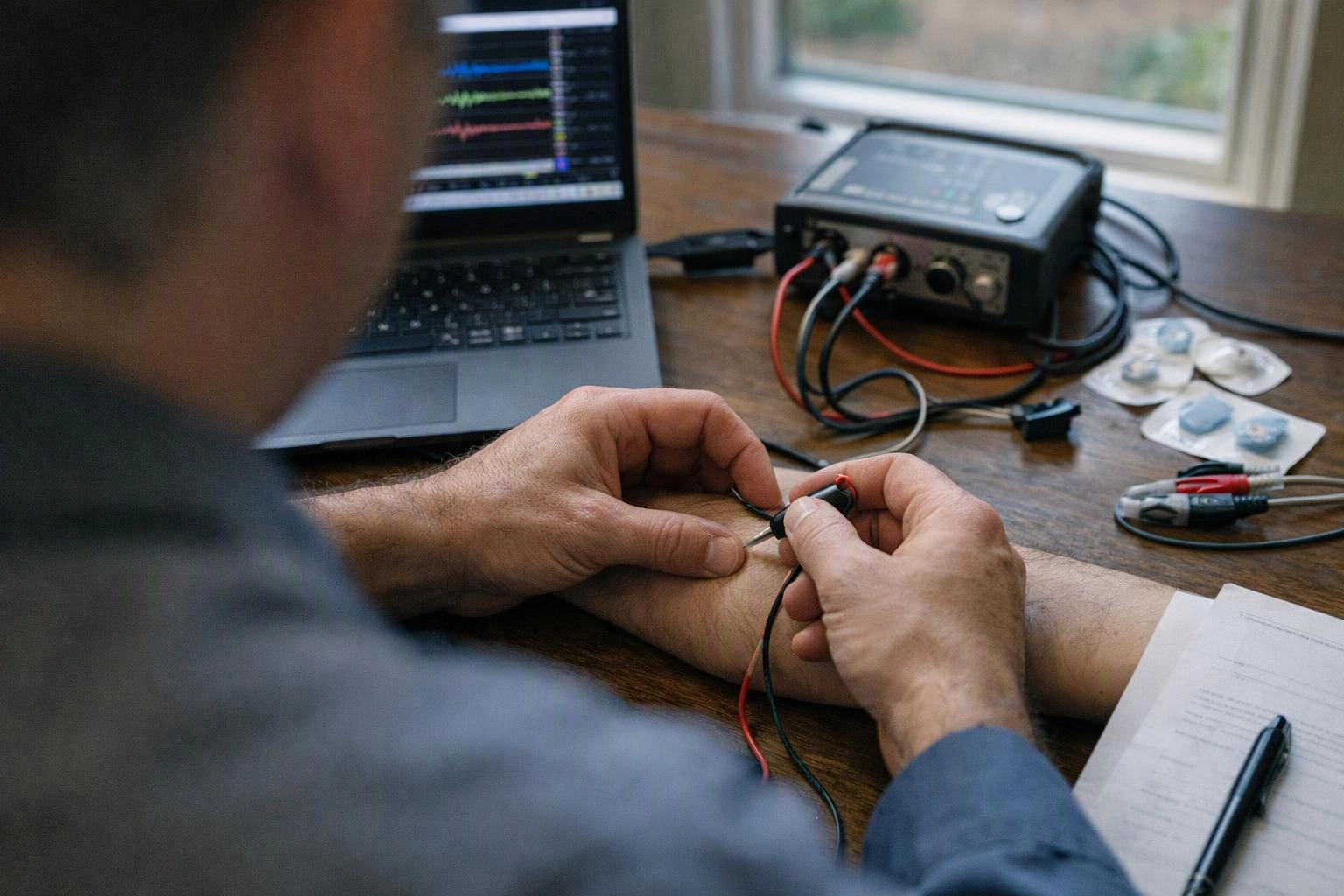
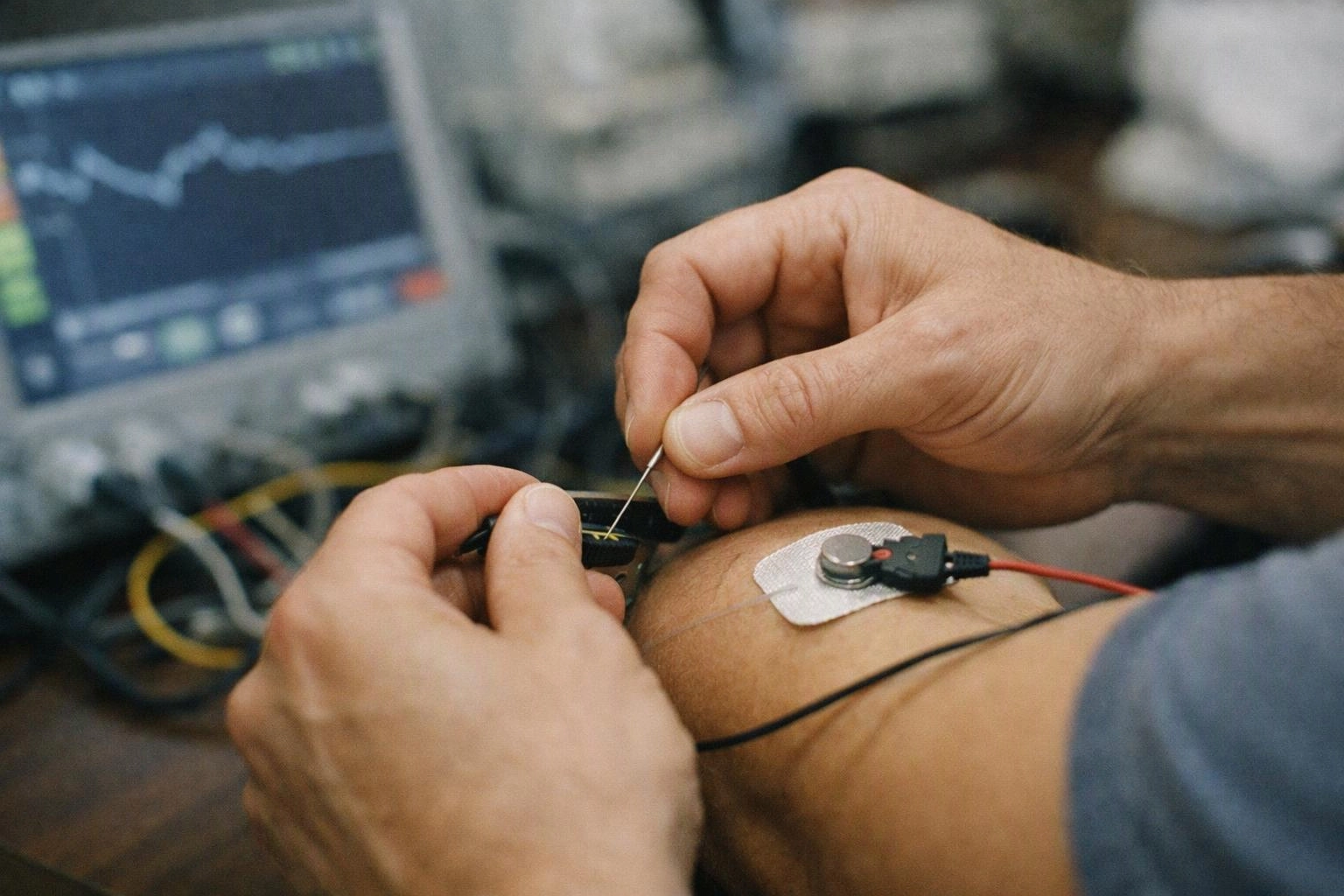
Electromyography measures electrical signals inside selected muscles. A clinician places a small needle electrode through the skin and asks you to relax or gently tighten the muscle. The equipment records changes in the signal during each part of the test.
Related glossary terms: Nerve Conduction Study, Neuropathic Pain, Paresthesia.
A related Nerve Conduction Study measures how electrical signals travel along a nerve. Clinicians often review both tests together because the findings can point toward muscle disease, nerve damage, or a problem near the spine. The pattern of activity also helps show whether a symptom affects one area or follows a wider nerve path.
Test findings are interpreted with your symptoms, physical examination, and medical history. A result does not identify the cause by itself, so the full clinical picture guides the next step.
From the Premier Injury Specialists team
When we evaluate neuropathy symptoms, we review Electromyography findings alongside strength, sensation, reflexes, and the symptom pattern. We look for signs that fit a peripheral nerve problem or a nerve root issue. That comparison helps our team keep the treatment plan focused on the likely source.
Electromyography in Practice: A Real-World Example
A person with burning foot pain and numb toes may receive Electromyography as part of a neuropathy evaluation. The findings can help show whether the symptoms fit a peripheral nerve problem or another source.
Related Services
Related Terms
Nerve Conduction Study
A Nerve Conduction Study is a diagnostic test that checks how well electrical signals travel through…
Neuropathic Pain
Neuropathic Pain is pain caused by damage, irritation, or abnormal signaling in the nerves that carry…
Paresthesia
Paresthesia is an unusual skin sensation, such as tingling, prickling, burning, numbness, or a feeling of…
Lumbar Radiculopathy
Lumbar Radiculopathy is a nerve-related condition in the lower back that affects a nerve root near…
Premier Injury Specialists
Have Questions About Electromyography?
Contact Premier Injury Specialists for practical guidance on Electromyography and related pain management physician work in McDonough.