
What Is Foraminal Stenosis?
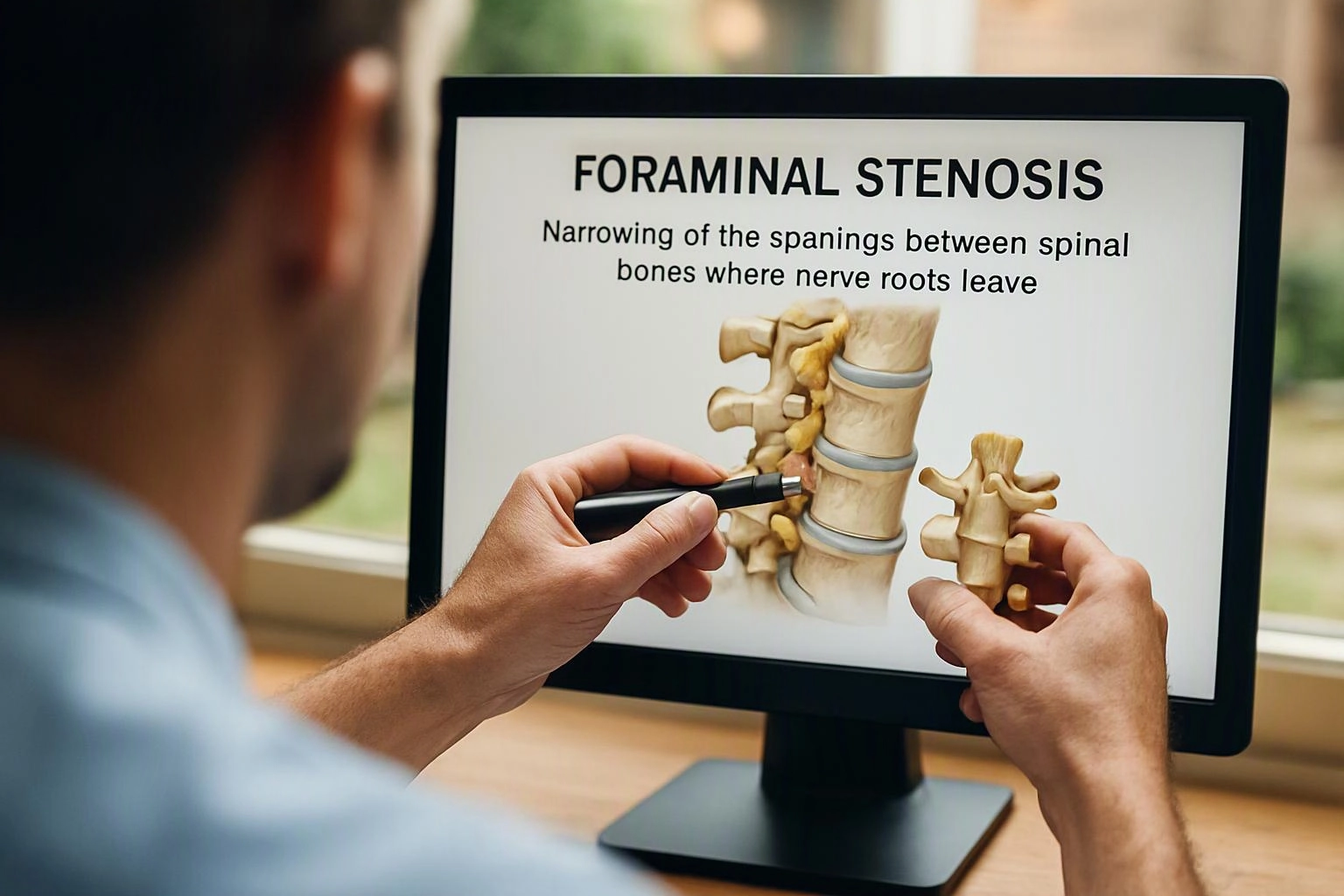
Foraminal Stenosis is narrowing of the openings between spinal bones where nerve roots leave the spinal canal. The reduced space can press on a nerve and cause pain, numbness, tingling, or weakness along that nerve’s path. Foraminal stenosis may affect the neck or lower back and can result from disc changes, bone growth, or other spine changes.
Quick Facts About Foraminal Stenosis
Category
Spine condition
Used for
Explaining nerve compression
Common confusion
Different from central canal narrowing
Also called
Narrowed nerve opening, Neural Foraminal Stenosis
Often discussed with
Herniated Disc Evaluation, Spine Injury Evaluation
Key Takeaways About Foraminal Stenosis
- The narrowing affects a nerve exit opening.
- Symptoms may follow one nerve’s path.
- Foraminal stenosis is not the same as every type of spinal stenosis.
How Foraminal Stenosis Works
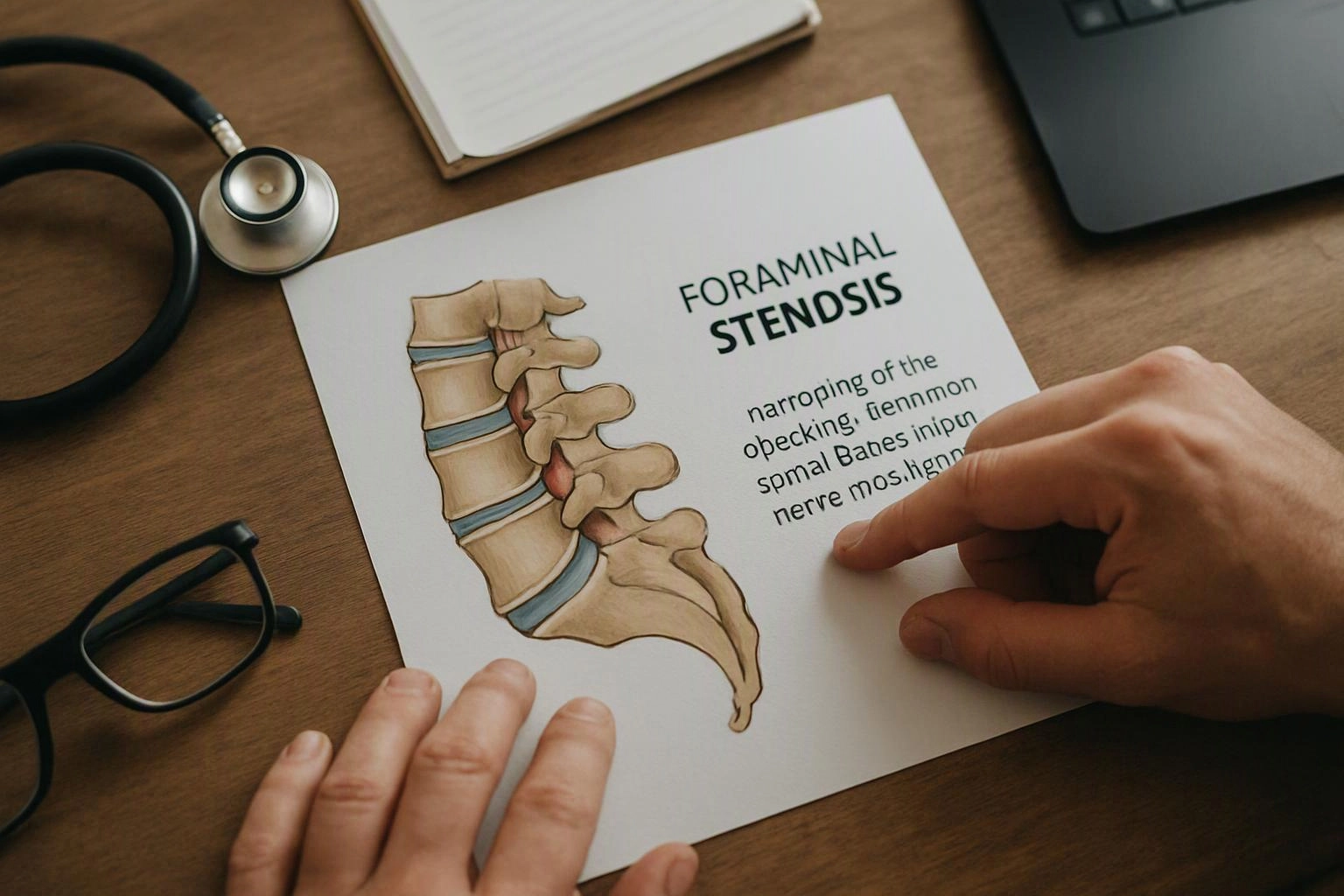
Foraminal Stenosis develops when a nerve exit opening becomes smaller. A disc may bulge into the opening, or nearby joints may form extra bone. These changes can leave less room for the nerve root.
Related glossary terms: Spinal Stenosis, Lumbar Radiculopathy, Cervical Radiculopathy.
Symptoms depend on the nerve and spine region involved. Neck changes may affect the shoulder, arm, or hand. Lower back changes may affect the hip, leg, or foot. An MRI can show the opening, nearby discs, and nerve contact. A physical exam helps connect those images with movement, strength, sensation, and pain patterns.
How It Is Used in Evaluation
Doctors use the term to describe a possible source of nerve symptoms. The finding must match the person’s symptoms and exam because a narrowed opening may not cause symptoms in every person.
From the Premier Injury Specialists team
When we assess a herniated disc, we review the reported symptoms, physical findings, and available imaging together. We check whether the narrowed nerve opening matches the pain or sensory pattern. That connection helps us separate a useful finding from an imaging finding that may not explain the complaint.
Foraminal Stenosis in Practice: A Real-World Example
A person with a lower back disc injury may develop foraminal stenosis near a nerve root. Pain or tingling may travel from the back into the leg, which can guide the herniated disc evaluation.
Related Services
Related Terms
Spinal Stenosis
Spinal Stenosis is a condition in which space inside the spinal canal or nerve openings becomes…
Lumbar Radiculopathy
Lumbar Radiculopathy is a nerve-related condition in the lower back that affects a nerve root near…
Cervical Radiculopathy
Cervical Radiculopathy is a condition that develops when a nerve root in the neck becomes irritated…
Magnetic Resonance Imaging
Magnetic Resonance Imaging is a medical imaging method that uses a strong magnetic field and radio…
Premier Injury Specialists
Have Questions About Foraminal Stenosis?
Contact Premier Injury Specialists for practical guidance on Foraminal Stenosis and related pain management physician work in McDonough.