
What Is Spinal Stenosis?
Spinal Stenosis is a condition in which space inside the spinal canal or nerve openings becomes narrower. The reduced space can press on the spinal cord or nearby nerves. In the lower back, this pressure may cause back pain, leg pain, numbness, tingling, or weakness that worsens during standing or walking.
Quick Facts About Spinal Stenosis
Category
Spinal narrowing condition
Used for
Understanding nerve pressure in the spine
Common confusion
Not the same as a herniated disc
Also called
Narrowing of the spinal canal, Lumbar spinal stenosis
Often discussed with
Minimally Invasive Lumbar Decompression, Spine Injury Evaluation
Key Takeaways About Spinal Stenosis
- Narrowing may affect the spinal canal or nerve openings.
- Lower back symptoms often change with standing, walking, or sitting.
- Spinal stenosis differs from a herniated disc, though both can affect nerves.
How Spinal Stenosis Works
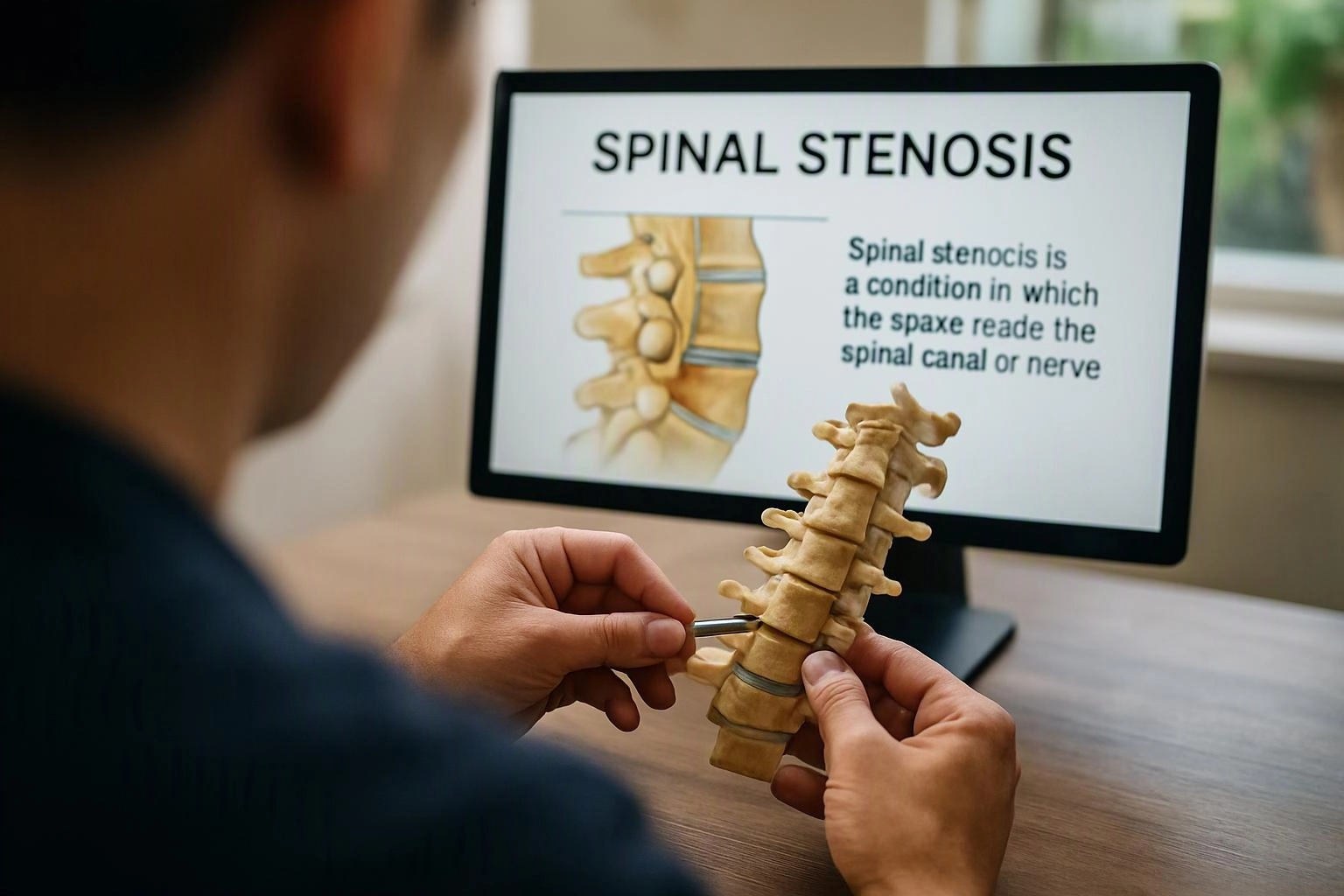
Spinal stenosis changes the amount of space around spinal nerves. Bone spurs, thickened ligaments, disc changes, or joint changes can reduce that space. The narrowing may affect the central spinal canal or the openings where nerves leave the spine.
Related glossary terms: Foraminal Stenosis, Lumbar Radiculopathy, Magnetic Resonance Imaging.
In the lower back, nerve pressure can make standing or walking harder. Symptoms may ease when the lower back bends forward, such as when sitting or leaning over. Imaging, often magnetic resonance imaging, helps show the location and pattern of narrowing.
How It Connects With Treatment
Minimally Invasive Lumbar Decompression focuses on tissue that contributes to narrowing in the lumbar spine. The treatment plan depends on the affected level, the type of narrowing, and the symptoms that match the imaging findings.
From the Premier Injury Specialists team
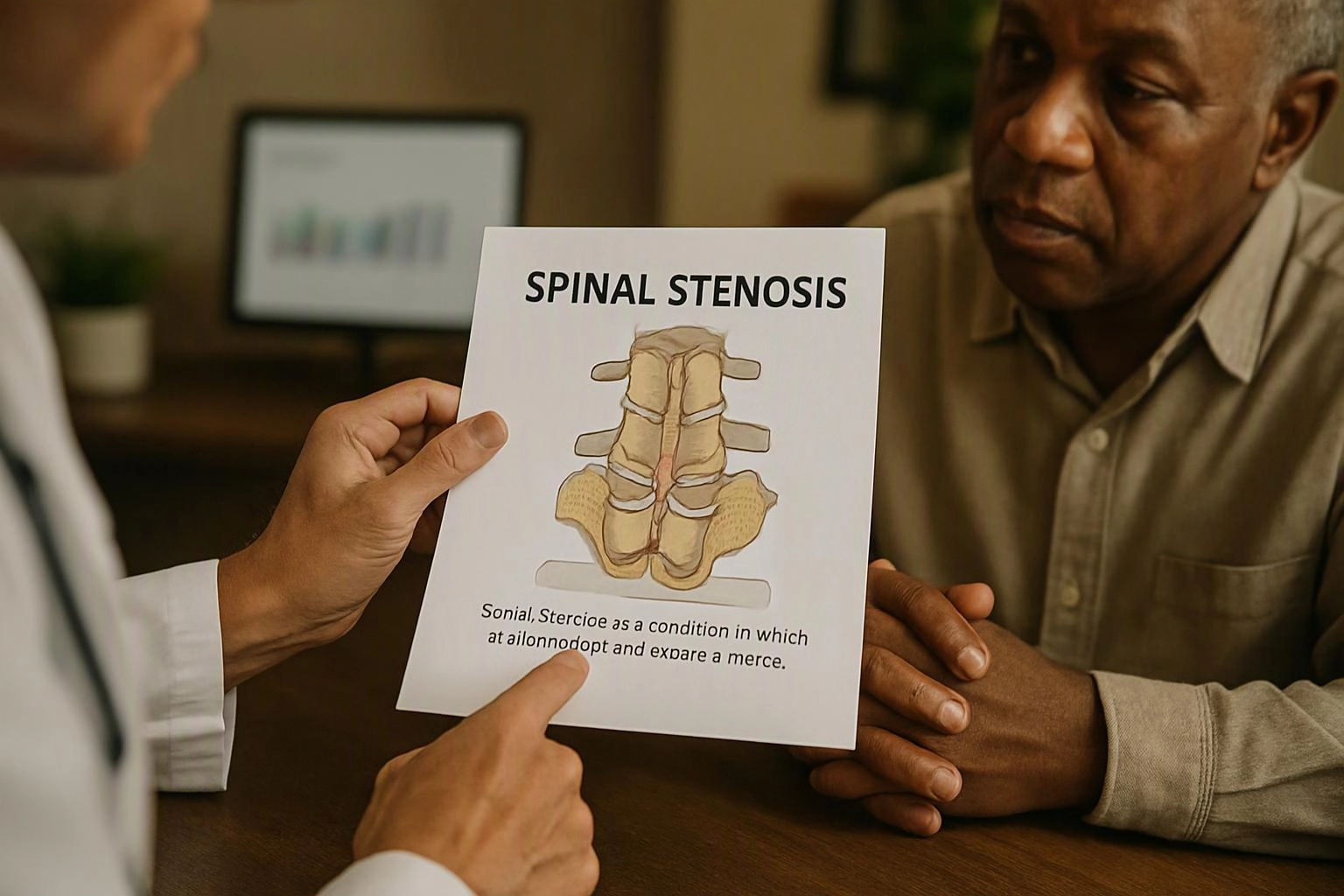
When we assess spinal stenosis, we compare the person’s symptoms with the physical examination and available imaging. Our team looks for a clear match between lumbar nerve pressure and symptoms before discussing Minimally Invasive Lumbar Decompression. We also consider whether narrowing affects the central canal or a nerve opening.
Spinal Stenosis in Practice: A Real-World Example
A person with lumbar spinal stenosis may feel leg heaviness and numbness after standing or walking. Sitting or bending forward may reduce those symptoms, while imaging can show narrowing around the affected nerves.
Related Terms
Foraminal Stenosis
Foraminal Stenosis is narrowing of the openings between spinal bones where nerve roots leave the spinal…
Lumbar Radiculopathy
Lumbar Radiculopathy is a nerve-related condition in the lower back that affects a nerve root near…
Magnetic Resonance Imaging
Magnetic Resonance Imaging is a medical imaging method that uses a strong magnetic field and radio…
Facet Arthropathy
Facet Arthropathy is a degenerative condition affecting the small joints that connect the bones in the…
Premier Injury Specialists
Have Questions About Spinal Stenosis?
Contact Premier Injury Specialists for practical guidance on Spinal Stenosis and related pain management physician work in McDonough.