
What Is an Opioid Agreement?
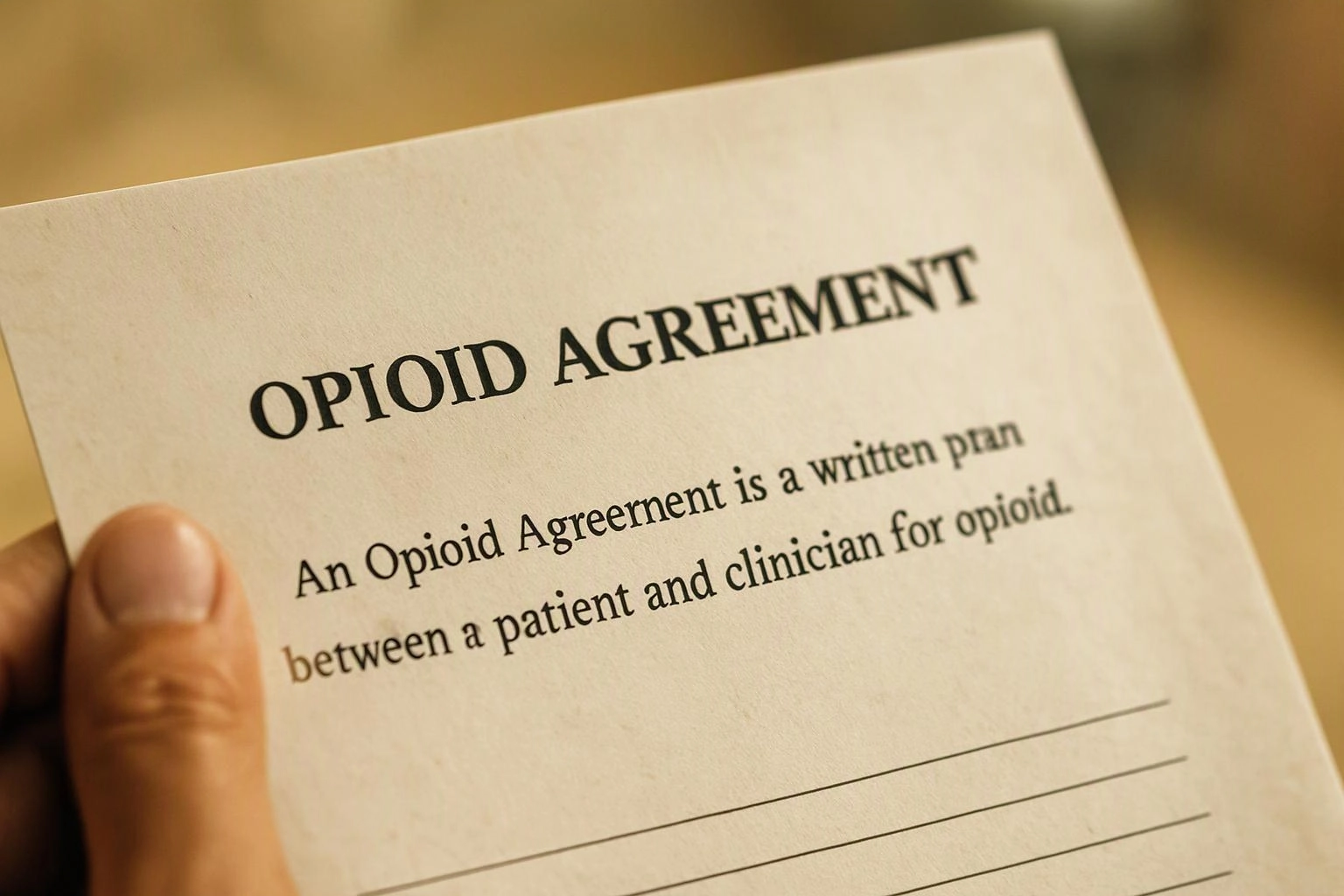
An Opioid Agreement is a written plan between a patient and clinician for opioid medication management. It explains how the medication will be used, monitored, and reviewed during treatment. The agreement may cover follow-up visits, medication records, refill requests, drug testing, and steps for addressing concerns about unsafe use or unexpected results.
Quick Facts About Opioid Agreement
Category
Treatment agreement
Used for
Opioid medication management
Common confusion
It is not a prescription
Also called
Pain contract, Opioid Treatment Agreement
Often discussed with
Pain Medication Management
Key Takeaways About Opioid Agreement
- It guides treatment and does not guarantee continued opioid prescriptions.
- The plan explains monitoring, follow-up, and refill expectations.
- It is not the same as a medication prescription.
How Opioid Agreement Works

An Opioid Agreement gives the patient and clinician a shared plan for prescribed opioid treatment. The document may describe the medication plan, follow-up visits, refill requests, pharmacy records, and drug testing. The clinician reviews these details as treatment continues.
Related glossary terms: Pain Scale, Chronic Pain, Neuropathic Pain.
The agreement also explains how changes in health, side effects, missed visits, or unexpected test results may affect the treatment plan. A Prescription Drug Monitoring Program check may help the clinician review controlled medication records. The agreement supports clear communication, but it does not promise a specific drug, dose, or length of treatment.
From the Premier Injury Specialists team
When we review an Opioid Agreement, we connect its terms with the patient’s medication history, current treatment goals, and follow-up plan. We check for clear instructions and document relevant changes during medication management. Our team also discusses concerns openly when records or treatment results do not match the agreed plan.
Opioid Agreement in Practice: A Real-World Example
A patient receiving opioid medication for ongoing back pain signs an Opioid Agreement during medication management. The plan explains how refills are requested, which records may be reviewed, and how the clinician will reassess treatment when the patient’s condition changes.
Related Services
Related Terms
Pain Scale
A pain scale is a tool that helps a person describe pain intensity in a consistent…
Chronic Pain
Chronic Pain is ongoing or recurring pain that continues beyond expected healing or returns over time…
Neuropathic Pain
Neuropathic Pain is pain caused by damage, irritation, or abnormal signaling in the nerves that carry…
Nociceptive Pain
Nociceptive pain is pain caused by actual or potential damage to body tissues. Specialized nerve endings…
Premier Injury Specialists
Have Questions About Opioid Agreement?
Contact Premier Injury Specialists for practical guidance on Opioid Agreement and related pain management physician work in McDonough.