Basivertebral Nerve Ablation vs. Other Ablation Options for Back Pain
Basivertebral nerve ablation targets vertebral endplate pain, while radiofrequency ablation targets facet or other nerve pain. Premier Injury Specialists evaluates the pain source, imaging, symptoms, and treatment history before discussing the better-fit option.
Request an EstimateHow Do Basivertebral Nerve Ablation and Radiofrequency Ablation Differ?
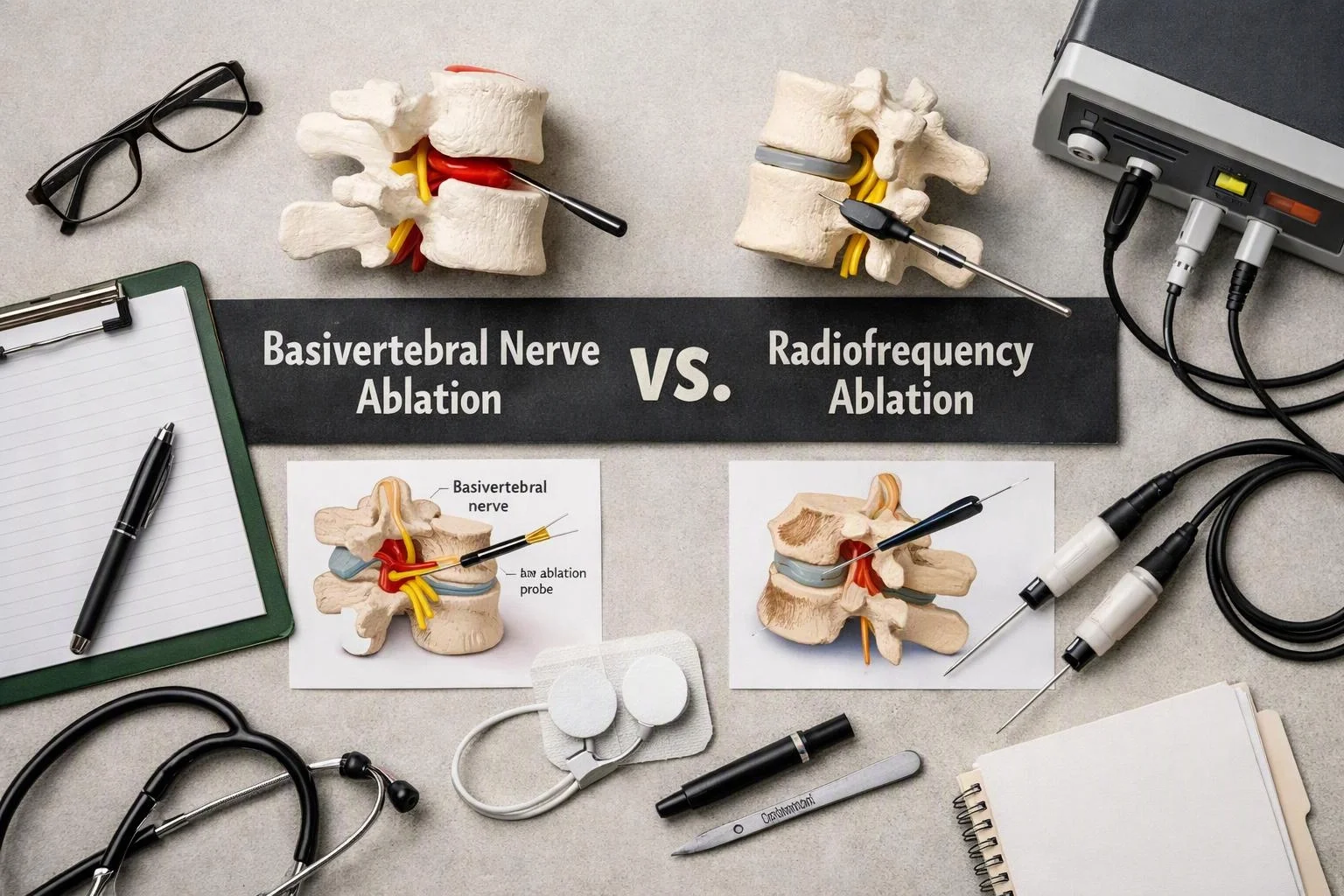
Basivertebral nerve ablation treats pain linked to vertebral endplates, while radiofrequency ablation usually treats pain carried by targeted sensory nerves near painful joints.
The basivertebral nerve travels inside the vertebral body and carries signals from painful endplates. Radiofrequency ablation uses radiofrequency energy near nerves such as the medial branch nerves, which can carry pain from the facet joints.
Both treatments are minimally invasive procedures for selected cases of chronic low back pain. We first identify the likely pain generator because nerve pain, endplate pain, and facet-mediated pain can feel similar.
Our Basivertebral Nerve Ablation service is discussed only after clinical evaluation supports vertebrogenic pain.
Basivertebral Nerve Ablation vs. Radiofrequency Ablation at a Glance
The better option depends on the suspected pain generator, imaging findings, symptoms, prior treatment response, and clinical eligibility.
These treatments address different structures, so a name-based choice can miss the real source of pain. We compare the target, treatment goal, risks, alternatives, and follow-up needs.
| Factor | Basivertebral Nerve Ablation | Radiofrequency Ablation |
|---|---|---|
| Treatment target | Basivertebral nerve inside the vertebral body | Selected sensory nerves near painful joints |
| Pain source | Vertebral endplate or vertebrogenic pain | Facet-mediated pain or another confirmed nerve target |
| Cost drivers | Evaluation, imaging review, facility needs, and follow-up care | Evaluation, diagnostic blocks, target location, and follow-up care |
| Treatment timeline | Depends on eligibility, scheduling, recovery, and follow-up | Depends on diagnostic confirmation, scheduling, recovery, and follow-up |
| Maintenance | Follow-up focuses on symptoms, function, and other pain sources | Some patients may need future assessment if pain returns |
| Best-fit patient | Patient with findings that support vertebrogenic pain | Patient with a confirmed facet or other suitable nerve pain source |
What Are the Advantages of Basivertebral Nerve Ablation?
Basivertebral nerve ablation may fit patients whose symptoms and imaging point to vertebral endplate pain.
Best for: patients with a matching pain pattern, suitable imaging, and no stronger explanation for their symptoms.
When Is Basivertebral Nerve Ablation the Better Fit?
Basivertebral nerve ablation is the better fit when the clinical picture supports vertebrogenic pain and other major pain sources have been assessed.
We review magnetic resonance imaging for Modic type 1 changes or Modic type 2 changes near the vertebral endplates. These findings matter only when they match the pain pattern and examination.
We also review conservative treatment, leg pain, numbness, weakness, and signs of a herniated disc. A different diagnosis may need attention before an ablation decision.
What Are the Advantages of Radiofrequency Ablation?
Radiofrequency ablation may fit patients whose pain comes from nerves associated with the facet joints or another confirmed target.
Best for: patients whose pain pattern and diagnostic testing support a suitable nerve target.
How Do We Evaluate Someone for Basivertebral Nerve Ablation?
We evaluate the pain pattern, examination findings, imaging, neurologic status, and previous treatment response before discussing basivertebral nerve ablation.
Our pain management physician uses the full clinical picture instead of relying on MRI findings alone.
What Should You Ask Before Scheduling an Ablation?
Ask which pain source the treatment targets, how the diagnosis was established, what alternatives remain, and how success will be assessed.
Ask how the MRI interpretation matches your symptoms and whether a herniated disc or nerve compression needs further evaluation. You should also ask about expected benefits, treatment risks, recovery guidance, and follow-up care.
Discuss the treatment goal in clear terms. The goal may involve reducing pain, improving movement, or supporting a return to daily activities.
What Alternatives Should You Compare Before Ablation?
Alternatives depend on the pain source and can include rehabilitation, medication, targeted injections, herniated disc evaluation, or surgical consultation.
Physical therapy can address strength, movement, posture, and activity tolerance. Medication management may also support function while the diagnosis develops.
An epidural steroid injection may be considered when symptoms suggest nerve root irritation. A facet joint injection or sacroiliac joint treatment may fit a different pain generator.
Spinal surgery may require discussion when there is significant nerve compression, progressive weakness, instability, or another structural concern. We use the evaluation to decide which alternative deserves attention.
Which Ablation Option Fits Your Back Pain?
We match the ablation option to the confirmed pain generator instead of choosing by treatment name alone.
Basivertebral nerve ablation may fit vertebrogenic low back pain with matching endplate findings. Radiofrequency ablation may fit facet-mediated pain or another confirmed nerve source.
Patient selection depends on symptoms, imaging, neurologic examination, prior care, and treatment goals. Premier Injury Specialists reviews these factors with you before discussing the next step.
Contact us to discuss your symptoms, imaging, treatment history, and available treatment alternatives.
Questions About Ablation Options for Back Pain
Can radiofrequency ablation treat vertebral endplate pain?
Usually, no. Radiofrequency ablation generally targets sensory nerves near painful joints, while vertebral endplate pain may involve the basivertebral nerve. Premier Injury Specialists reviews the pain source before recommending either option.
Does basivertebral nerve ablation treat pain from a herniated disc?
Basivertebral nerve ablation does not directly treat pain caused by a herniated disc. We assess disc findings, leg pain, numbness, weakness, and other neurologic symptoms before selecting treatment.
Can someone have both facet pain and vertebrogenic pain?
Yes. A person can have more than one back pain generator, including facet pain and vertebrogenic pain. We separate these sources through history, examination, imaging, and targeted diagnostic testing.
What symptoms suggest that back pain needs a broader evaluation before ablation?
Progressive weakness, significant numbness, radiating leg pain, bowel or bladder changes, fever, or major trauma can require broader evaluation first. We assess these warning signs before discussing an ablation procedure.
Related Resources
Epidural Steroid Injections: Purpose, Evaluation, and Considerations
What Goes With ItHow to Track Progress in a Pain Management Plan
Brand vs BrandRadiofrequency Ablation Providers Worth Comparing in McDonough (2026)
What It SolvesWhen Persistent Back Pain Needs a Specialist Evaluation