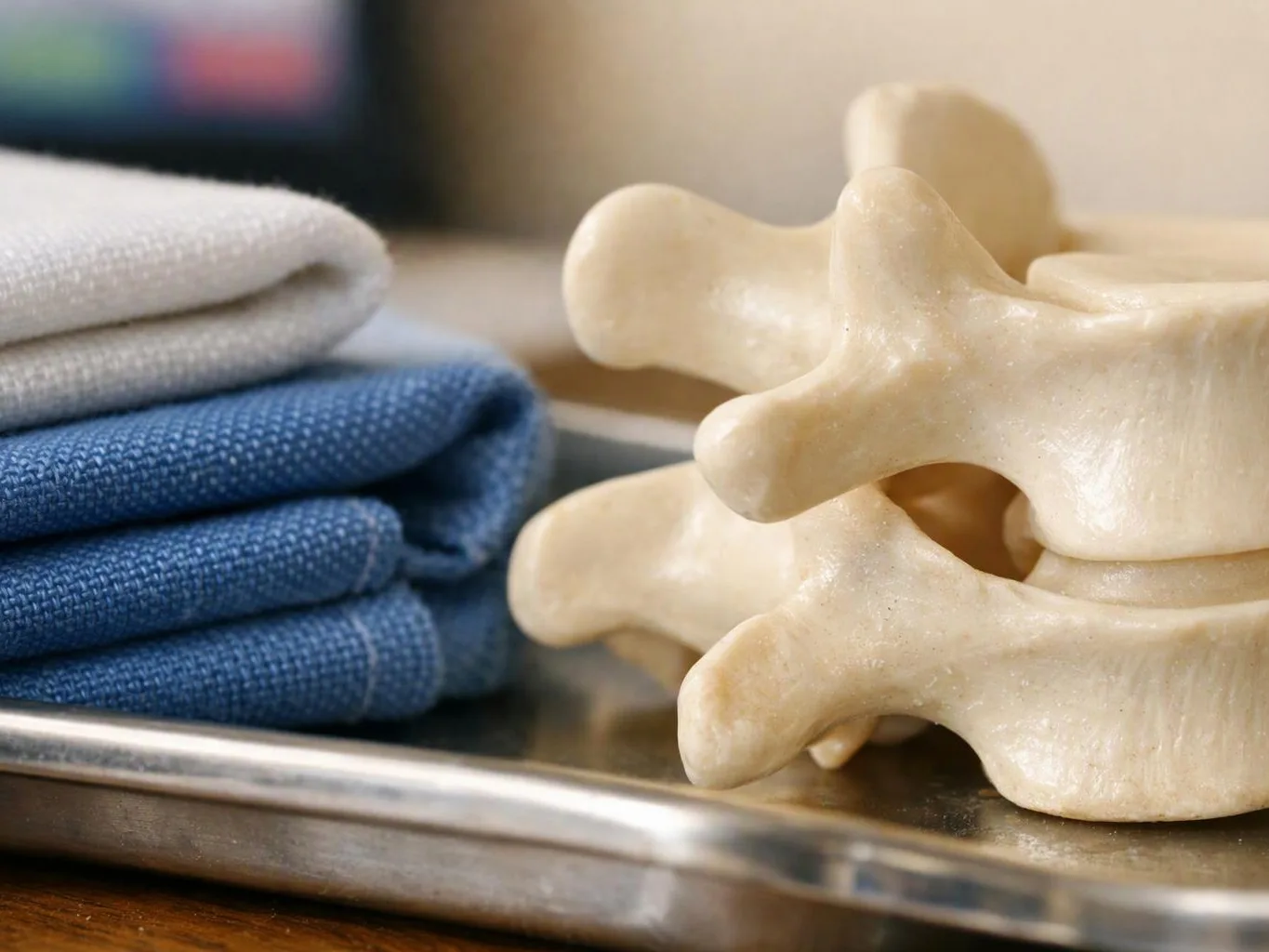
Selected Minimally Invasive Procedures for Chronic Back Pain
Minimally invasive procedures for chronic back pain include basivertebral nerve ablation and minimally invasive lumbar decompression. Premier Injury Specialists evaluates pain sources, imaging, symptoms, and prior care to help identify the most suitable option.
Request an Estimate
Which Minimally Invasive Procedures Can Treat Chronic Back Pain?
Minimally invasive spine procedures can target vertebral endplate pain or pressure on spinal nerves, depending on the pain source.
Chronic back pain can come from several structures in the spine. A pain management physician reviews your symptoms and examination findings before recommending treatment.
Basivertebral nerve ablation addresses pain signals from inside vertebral bones. Minimally invasive lumbar decompression creates more room for compressed nerves in the lower back.
What Is Basivertebral Nerve Ablation?
Basivertebral nerve ablation is a minimally invasive procedure that reduces pain signals from the basivertebral nerves inside vertebral bones.
The basivertebral nerve carries signals from the vertebral endplates. Irritation in this area can cause vertebrogenic pain and chronic low back pain.
We use your symptoms and diagnostic imaging to determine whether this pain pattern may fit the procedure. You can learn more about our approach to Basivertebral Nerve Ablation.
Who May Be Considered for Basivertebral Nerve Ablation?
People with persistent vertebrogenic pain and matching imaging findings may be considered after a clinical evaluation.
Our team looks for a consistent pain pattern, suitable magnetic resonance imaging findings, and symptoms that have continued despite conservative treatment.
Patient selection depends on the full spine evaluation. Imaging alone doesn't determine whether this treatment is appropriate.
What Is Minimally Invasive Lumbar Decompression?
Minimally invasive lumbar decompression is a procedure that creates more space for compressed nerves in the lower spine.
Lumbar spinal stenosis can narrow the space around spinal nerves. Thickening of the ligamentum flavum may add to that narrowing.
Nerve compression can cause low back pain, leg pain, numbness, or weakness. We assess the connection between your symptoms and the compressed area before discussing decompression.
How Do We Evaluate Chronic Back Pain Before Choosing a Procedure?
We evaluate the pain pattern, physical findings, nerve function, imaging, and prior treatment before discussing a procedure.
Our spine injury evaluation connects your reported symptoms with objective findings. The process helps us identify the most likely pain generator.
This structured review supports safer treatment planning. It also helps us discuss alternatives when a procedure doesn't match the findings.
When Might Both Procedures Be Considered Together?
Both procedures may be considered when imaging and symptoms show separate pain sources.
Our team first separates vertebrogenic pain from lumbar spinal stenosis and nerve compression. A coordinated plan is considered only when each procedure has a clear purpose.
How Can These Procedures Work Together in a Treatment Plan?
The procedures can address separate pain generators, and the sequence depends on examination findings, imaging, symptoms, and prior care.
Total cost depends on the procedures, facility, anesthesia, imaging, and follow-up included in the plan. We explain which services are included when we prepare treatment planning information.
How Do Basivertebral Nerve Ablation and Lumbar Decompression Differ?
Basivertebral nerve ablation and lumbar decompression address different suspected pain sources.
Patient selection depends on whether the main problem involves vertebral endplate pain or nerve compression.
| Comparison point | Basivertebral nerve ablation | Minimally invasive lumbar decompression |
|---|---|---|
| Main target | Basivertebral nerve signals linked to vertebral endplate pain | Nerve compression in the lower spine |
| Common pain pattern | Vertebrogenic chronic low back pain | Back pain with leg pain or other nerve-related symptoms |
| Procedure goal | Reduce pain signals from the basivertebral nerve | Create more space for compressed spinal nerves |
| Key selection factors | Pain pattern and matching vertebral imaging findings | Symptoms, examination findings, and evidence of lumbar stenosis |
What Should You Discuss Before Choosing a Procedure?
Before choosing a procedure, discuss the suspected pain source, treatment goal, possible risks, alternatives, recovery needs, and follow-up plan.
Ask how the procedure fits your examination and imaging findings. We also review possible benefits and risks in clear terms.
Recovery planning should cover activity changes, symptom monitoring, and follow-up care. Treatment options may include conservative care or other interventional back pain procedures.
How Premier Injury Specialists Helps With Procedure Planning
Premier Injury Specialists reviews your symptoms and diagnostic findings to connect the evaluation with appropriate back pain treatment.
Our pain management physician considers the pain pattern, physical examination, neurologic examination, and imaging. We use that information to discuss whether basivertebral nerve ablation or minimally invasive lumbar decompression may fit your needs.
We also explain alternatives, procedure goals, cost drivers, and follow-up care. Contact us through our consultation page to begin a patient-specific spine injury evaluation.
Premier Injury Specialists offers Free Consultations for people seeking guidance about chronic back pain treatment and procedure planning.
Get a Free EstimateRelated Resources
Epidural Steroid Injection vs. Facet Joint Injection: What to Discuss With Your Physician
Compared ToMedial Branch Block vs. Radiofrequency Ablation: Comparing the Treatment Path
Compared ToBasivertebral Nerve Ablation vs. Other Ablation Options for Back Pain
What It SolvesWhen Persistent Back Pain Needs a Specialist Evaluation