Peripheral Nerve Stimulation vs. Spinal Cord Stimulation
Peripheral nerve stimulation targets a specific peripheral nerve, while spinal cord stimulation targets pain signaling near the spinal cord. Premier Injury Specialists compares treatment areas, trial questions, benefits, risks, maintenance, and coverage factors to support an informed discussion.
Request an EstimatePeripheral Nerve Stimulation vs. Spinal Cord Stimulation at a Glance
Peripheral nerve stimulation usually focuses on a specific peripheral nerve, while spinal cord stimulation targets pain signaling near the spinal cord. Relative cost depends on the device, procedure, trial, follow-up care, coverage, and treatment plan.
Both options are forms of neuromodulation. The best fit depends on your pain pathway, diagnosis, prior treatments, and treatment goals.
- Peripheral nerve stimulation may fit localized pain linked to a known nerve.
- Spinal cord stimulation may fit pain involving spinal or broader nerve pathways.
| Factor | Peripheral Nerve Stimulation | Spinal Cord Stimulation |
|---|---|---|
| Pain location | A specific peripheral nerve or nearby area | Pain pathways near the spinal cord |
| Cost drivers | Device, procedure, trial, follow-up care, coverage, and treatment plan | Device, procedure, trial, follow-up care, coverage, and treatment plan |
| Trial process | May use temporary leads near the target nerve | May use temporary leads near the spinal cord |
| Maintenance | Follow-up visits, device settings, and battery planning | Follow-up visits, device settings, and battery planning |
| Patient fit | Clearly localized nerve-related pain | Spinal, limb, or broader neuropathic pain patterns |
What Is Peripheral Nerve Stimulation?
Peripheral nerve stimulation is a pain treatment that uses electrical signals near a targeted peripheral nerve to change pain signaling.
Peripheral nerves carry messages between the body and the nervous system. When a nerve is injured or irritated, those messages can contribute to neuropathic pain.
A nerve stimulation system uses a lead and pulse generator to deliver controlled signals. Our team reviews the treatment area, pain cause, and response to earlier care before discussing this option.
What Is Spinal Cord Stimulation?
Spinal cord stimulation is a pain treatment that uses electrical signals near the spinal cord to influence pain signaling.
The system places a lead near spinal nerves and connects it to an implantable pulse generator. Device settings can be adjusted during follow-up care.
Spinal cord stimulation may address neuropathic pain that follows spinal or broader nerve pathways. We match the discussion to your diagnosis and treatment goals.
What Are the Advantages of Peripheral Nerve Stimulation?
Peripheral nerve stimulation can suit pain that follows a specific peripheral nerve, but patient fit depends on the pain source and clinical evaluation.
Targeted treatment may help focus electrical stimulation on the nerve connected to localized pain. A stimulation trial helps show whether the treatment approach matches your symptoms.
Best for: Peripheral nerve stimulation may fit nerve-related pain with a clear location and cause.
What Are the Advantages of Spinal Cord Stimulation?
Spinal cord stimulation can suit pain involving spinal or broader nerve pathways, but patient fit depends on the diagnosis and treatment goals.
Spinal cord stimulation may address persistent pain that travels through spinal pain pathways. The trial also helps assess treatment response before a permanent implant is considered.
Best for: Spinal cord stimulation may fit persistent pain involving spinal or broader nerve pathways.
How Do the Trial and Treatment Processes Compare?
Both treatments may involve a trial period before a longer-term system is considered, and the exact process depends on the treatment plan.
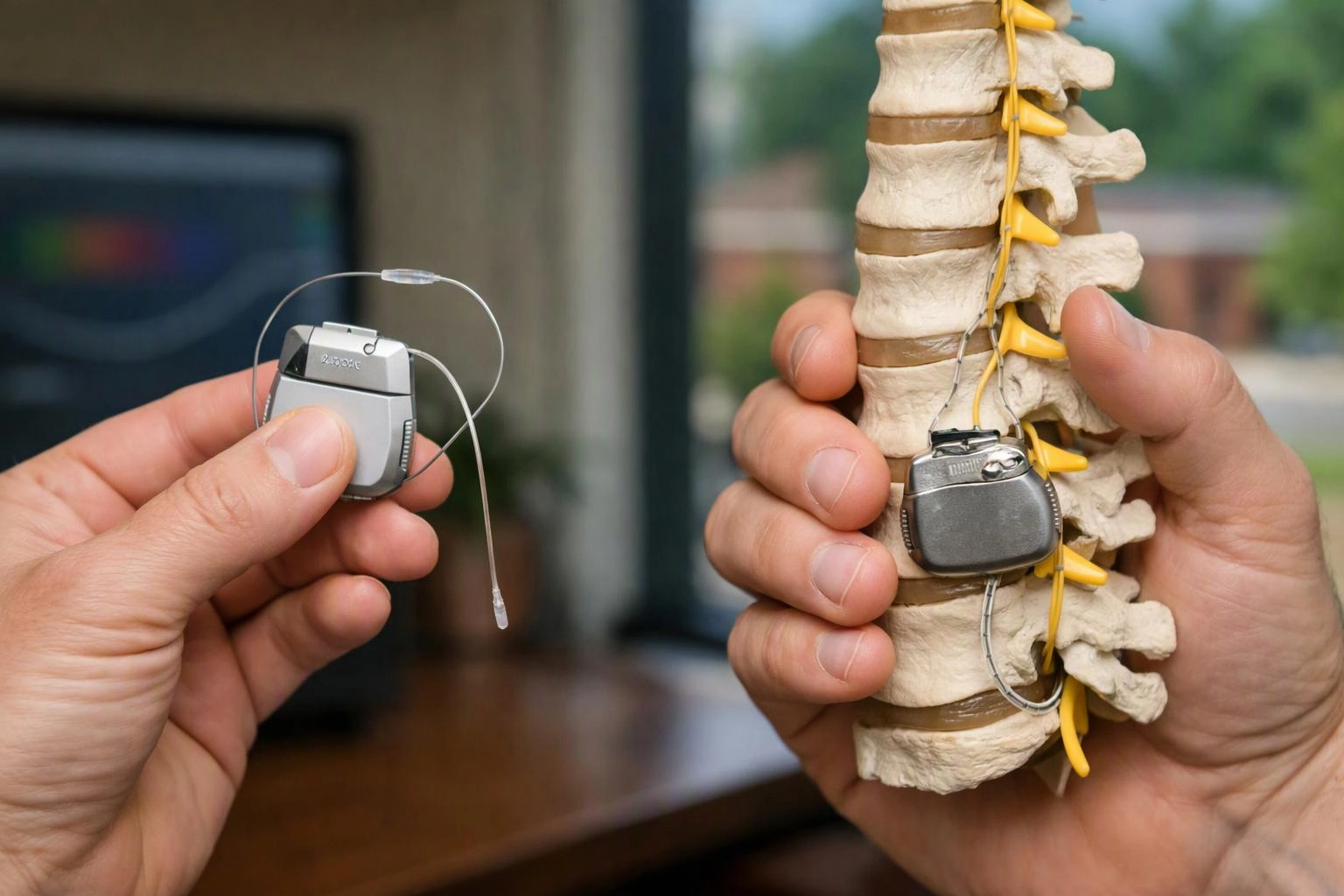
A peripheral nerve stimulation trial places temporary leads near the selected nerve. A spinal cord stimulation trial places temporary leads near the spinal cord. The team reviews stimulation settings, symptoms, and daily function during follow-up evaluation.
A pain diary can help record changes in pain, movement, sleep, and activity. If the trial supports the plan, a permanent implantable system may be discussed.
The longer-term system may include a lead, electrode, programmer, battery, and implantable pulse generator. We explain how each part supports ongoing device care.
What Should You Ask Before a Peripheral Nerve Stimulation Trial?
Before a peripheral nerve stimulation trial, ask how your diagnosis, target nerve, goals, follow-up, risks, and coverage fit the plan.
- Pain diagnosis: How does the diagnosis connect to the proposed treatment?
- Target nerve: Which nerve or pain pathway will the trial address?
- Trial goals: Which changes should be tracked during the trial?
- What follow-up evaluation will review the results?
- What procedure risks or device concerns should be discussed?
- Will health insurance require prior authorization or medical necessity review?
- Which deductibles, coinsurance, or other out-of-pocket costs may apply?
Which Treatment May Fit Your Pain Pattern?
Peripheral nerve stimulation may fit a clearly localized nerve pattern, while spinal cord stimulation may fit pain involving spinal or broader nerve pathways.
Pain location is only one part of patient selection. We also review the pain cause, peripheral nerve injury, spinal nerve pain, neuropathy, prior treatments, and treatment goals.
Your medical history can affect whether a stimulation trial makes sense. Our team uses that history and your treatment response to guide the discussion.
How Do You Compare Coverage and Cost for Nerve Stimulation?
Nerve stimulation cost depends on the treatment selected, device and procedure needs, follow-up care, insurance rules, and patient responsibility.
Health insurance may review medical necessity, the coverage policy, and prior authorization requirements. The trial procedure and implant procedure may also have separate coverage rules.
Deductible and coinsurance amounts can change your out-of-pocket costs. We explain what our quote includes and how to request an exact quote for your treatment plan.
Our office offers Free Consultations to discuss your questions and next steps.
What Risks and Follow-Up Care Should You Discuss?
Peripheral nerve stimulation and spinal cord stimulation require discussion of procedure risks, device concerns, symptom changes, and follow-up care before treatment.
Risks may include infection, bleeding, lead movement, or device discomfort. Stimulation changes can also affect how symptoms feel.
Follow-up appointments help review device settings, treatment response, and battery needs. We explain device maintenance and warning signs that need prompt medical attention.
How Premier Injury Specialists Helps You Compare Peripheral and Spinal Stimulation
Premier Injury Specialists reviews your pain pattern, diagnosis, medical history, treatment goals, and coverage questions before discussing a stimulation option.
We evaluate whether targeted nerve stimulation or spinal cord stimulation matches the pain pathway involved. Our team also explains the trial process, possible permanent implant, follow-up care, and insurance questions.
For more information about targeted treatment, visit our Peripheral Nerve Stimulation service page.
Contact Premier Injury Specialists to discuss your symptoms and treatment goals.
Questions About Peripheral and Spinal Stimulation
Can peripheral nerve stimulation and spinal cord stimulation be used for neuropathy?
Yes, both treatments may be considered for neuropathy when the pain pattern and diagnosis support the choice. Premier Injury Specialists reviews the affected nerve pathways, prior treatments, and treatment goals before discussing a trial.
Is a stimulation trial required before a permanent system?
A stimulation trial may be used before a permanent system is considered. The exact process depends on the treatment plan, medical necessity review, and coverage policy.
What happens if the stimulation trial does not help?
If the stimulation trial does not help, the treatment team reviews the response and discusses other care options. A permanent implant is not considered without evaluating whether the trial met its goals.
Does insurance coverage differ between peripheral nerve stimulation and spinal cord stimulation?
Yes, insurance coverage can differ between peripheral nerve stimulation and spinal cord stimulation. Health insurance rules may address medical necessity, prior authorization, the trial procedure, the implant procedure, and follow-up care.